Our Government Would Never Lie to Us, Right?

I thought this an appropriate post with all that is going on in government and politics these days. Tighten up your BS filter people!

Back in the 60’s I totally believed the war in Vietnam was essential to preserving the “free world”.  The free world, of course, were all the democratic nations.  The communists were coming to get us and take away our hard-earned freedom.  Of course I pretty much believed everything the government told me back then. 

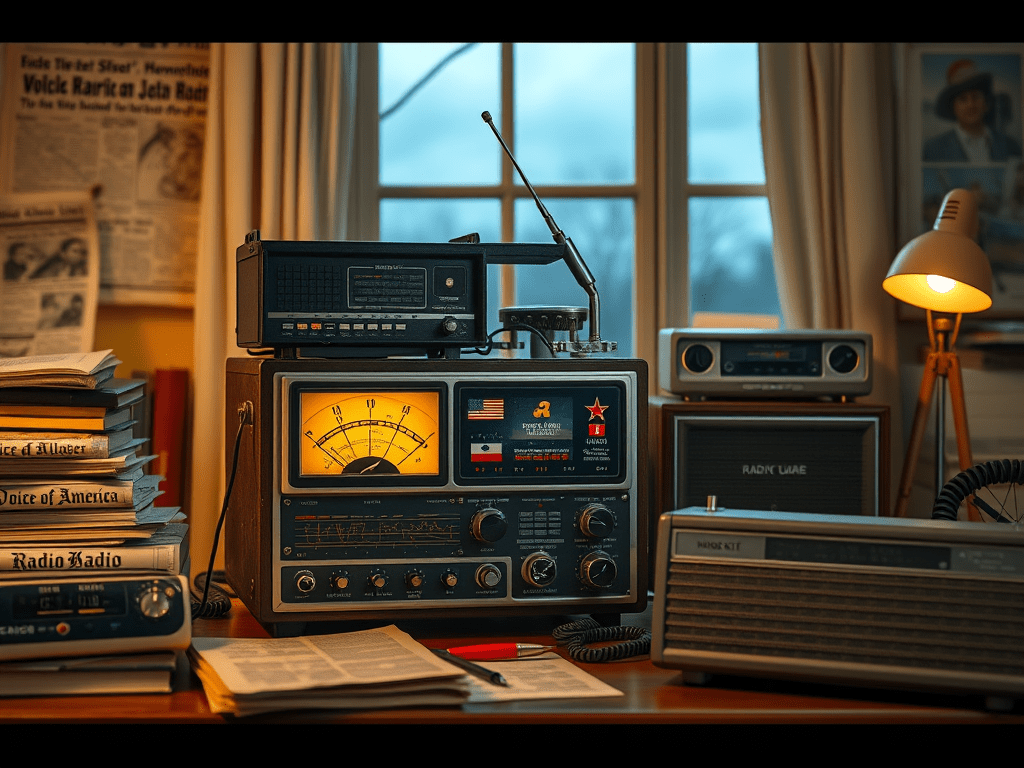
I was high school age the first time I became aware of national propaganda. I was working on getting my Ham Radio license.  I built a Knight Kit Star Roamer shortwave receiver and installed a long-line dipole antenna on the roof.  Between studying the FCC rules and practicing Morse code, I enjoyed tuning in shortwave radio stations from around the world.  I listened to most of the English-speaking stations around the world, but stations concerned with the war were the most interesting at the time.  I regularly listened to two stations for war news, Voice of America and Radio Havana.

Listening to these two stations quickly dissolved my naivety that all news was reported accurately.  Voice of America claimed the US was winning the war with major enemy casualties and very few of ours while Radio Havana reported exactly the opposite.  Asking my Dad about this resulted in an interesting explanation of why and how propaganda works.  I never took the news at face value again.  Even news sources doing their best to report the news accurately are at the mercy of the government press releases for a lot of information.  So governments are spinning the news.

Breaking free from government propaganda is challenging, but many people have done so through a mix of critical thinking, exposure to alternative perspectives, and historical awareness. Here are some of the key ways people have learned to recognize and resist propaganda:

Understanding How Propaganda Works

People who study history and psychology recognize patterns of propaganda used in the past, like fear-mongering, scapegoating, appeals to nationalism, and repetition.  Recognizing these logical fallacies (straw man arguments, false dilemmas, personal attacks) helps people see when they’re being manipulated.  Advanced college degrees are not needed to understand the basic concepts.  These are not difficult concepts to learn and train yourself to spot.

Exposure to Diverse Information Sources

Those who escape propaganda often start by seeking out alternative viewpoints like reading news from international sources, listening to dissident voices, or accessing independent media.  The hard part is finding news sources without a political bias. When in doubt, ask ChatGPT.

The Internet has helped, but in authoritarian countries, people have to use VPNs, encrypted messaging, and dark web resources to bypass government censorship.

Personal Experience vs. Official Narratives

Many people start questioning propaganda when their real-life experiences don’t match what they’ve been told. Soviet citizens in the 1980s were told they lived in a utopia, but they saw breadlines, corruption, and shortages firsthand.  The availability of satellite TV increased their awareness of the rest of the world.  Teenagers and young adults tore down the Berlin wall, not Ronald Reagan who took credit for it!  Iraq War veterans came home and spoke out when they realized the reasons for the war were exaggerated or false.

Firsthand contact with “enemies” often changes perspectives. Soldiers, travelers, or refugees often realize that the people they were taught to fear are just like them.

Studying History and Past Lies

Seeing how governments have lied before helps people recognize when it’s happening again.  Here’s some good examples:

Gulf of Tonkin Incident (Vietnam War) – The U.S. falsely claimed an attack to justify war.

Weapons of Mass Destruction (Iraq War) – No WMDs were found, despite claims.

Soviet Lies about Chernobyl – The USSR downplayed the nuclear disaster for days.

Stopping NATO Aggression (Ukraine War) – Putin masking efforts to expand the Russian empire.

Climate change denial (oil companies) – Deniers claim this change is naturally occurring and has happened many times in the past. This is overwhelmingly false. Past climate shifts took thousands to millions of years while today’s warming is happening in decades, making it much harder for ecosystems and human societies to adapt.

Once people see how easily the truth gets manipulated, they question present-day narratives more critically.

Conversations and Underground Movements

Dissent spreads through private discussions, underground literature, and social media.  In authoritarian regimes, people share banned books, listen to foreign radio stations (like Radio Free Europe in the Cold War), and circulate illegal self-published texts.  Today, leaked information (e.g., Wikileaks, whistleblowers) plays a big role in breaking official narratives.

Asking: “Who Benefits?”

Many people break free by simply asking “Who profits from this?”  For example:

War – Military contractors, politicians seeking power, resource-hungry corporations.

Fear – Justifies government control, new laws, or tax increases.

Division – Prevents people from uniting against their real oppressors.

Breaking Free is Hard but Possible

Governments use harsh penalties to keep people from questioning the narrative. Whistle-blowers get jailed, journalists disappear, and dissenters are silenced.  Yet, people still resist, from Soviet defectors to Chinese dissidents to American war protesters. Still, you don’t need to break the law to have a meaningful impact.

I was drafted for Vietnam.  Fortunately, the war ended before I was due to go to Nam, but too many others were not so lucky.  At that time, most of us in the military realized the war was a government sham.  The government spent way too much time trying to cover it up and needless lives were lost.  That is the worst consequence of propaganda. This is the filter I process everything through now.

By educating ourselves and questioning narratives, we can hold leaders accountable and demand a more honest government.  Fact check everything and study important issues in depth.  Making decisions based on news media “sound bites” is never good. Beware of misleading statistics.  The government will never be any better than the people they govern.  Let us hold them to a higher standard!

A Message from Every Good Person to Every Government on Earth

“All I Really Need to Know I Learned in Kindergarten.” Robert Fulghum

Attention world governments!  I have an especially important message from all the good people of Earth.  WE DON’T WANT YOU TO WAGE ANY WAR ON ANYONE FOR ANY REASON!  We are all incredibly surprised you do not know this, so the purpose of this message is to let you know beyond all doubt.

You know all your wars are motivated by your own fears.  We have no such fears.  We here in the NATO countries wish no harm on our friends in Russia, China, North Korea, or anywhere else.  Likewise, we here in Russia and North Korea never asked our government to waste our dwindling resources to fight off NATO countries.  We are all the same, just regular folks trying to get by.  Wars are not started by the people, but by governments fighting their own battles!

We know there’s still a lot of us that are under the influence of our government’s powerful propaganda campaigns.  Most propaganda aims at putting the fears of the government on the people – “We must protect ourselves from Communist takeover.” or “We must protect ourselves from Western imperialism.”  We, the good people, are smart enough to recognize this propaganda as a diversion tactic to keep us from seeing the real goal of most of our governments, which is, national expansion to benefit the elite few who fear losing power!  There are more of us that realize this all the time, so these tactics will not work for much longer. We have learned to recognize propaganda through critical thinking, exposure to different perspectives, and historical awareness.

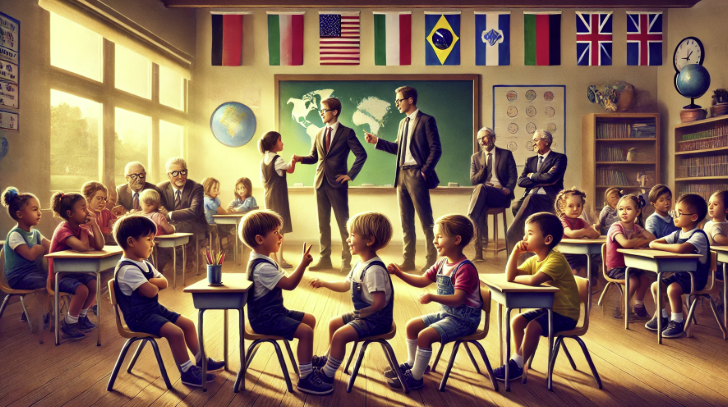
We have had tens of thousands of years of learning to live together.  Yes, civilizations have had to fight it out all this time, but there is a point at which we figure out a better way to solve ALL problems.  In fact, we’ve learned how to fix all the basic types of problems in kindergarten.  You government guys didn’t flunk kindergarten, did you?  Let us review the most common problems governments want to fight over and compare each one to a kindergarten equivalent.

1. Geopolitical conflicts and territorial disputes that persist between nations – Two children arguing over who gets to play in the corner with the best toys, with each claiming “I was here first!” or “This is MY spot!”

2. Ideological and religious differences leading to extremism and conflict – Children disagreeing over the “right way” to build a block tower or draw a cat, with each insisting their method is the only correct one.

3. Economic inequality within and between nations, creating instability – One child has many toys from home while another has none, creating tension during playtime when the child with many toys refuses to share.

4. Competition for limited resources, including water, land, and energy – Three children fighting over the one red crayon or the single class iPad during free time.

5. Nationalism and identity-based conflicts that resist compromise – Groups forming based on arbitrary distinctions like “blue table kids” versus “green table kids,” with each group developing loyalty and excluding others.

6. Historical grievances and unresolved injustices that fuel ongoing tensions – “I’m not sharing with Sam because yesterday he took my juice box and didn’t say sorry.”

7. Militarization and arms races, including nuclear proliferation concerns – Children building increasingly elaborate “defensive” pillow forts, eventually taking all the cushions, and leaving nothing for others.

8. Failed states and regions with weak governance that become conflict zones – Chaos erupting when the teacher briefly leaves the room and the assigned “class monitor” can’t maintain order.

9. Terrorism and non-state armed groups operating across borders – A child disrupting others’ games or destroying their artwork because they weren’t included.

10. Climate change impacts that can trigger resource conflicts and migration crises – Disputes arising when outdoor recess is canceled due to rain, forcing everyone to share limited indoor space and toys.

I won’t insult your intelligence by explaining the fixes for each of these as I know you learned them from your parents and teachers many years ago.  And I realize these simple solutions get lost in the complexity of adult life.  But, as our leaders, you need to function more like the teachers than the children!  If you kids don’t sit down and shut up there will be no snack time today!

World leaders, if you still don’t get it, you need to read more history and learn from it this time.  The longest lasting empires; Roman, Byzantine, Ottoman, and the China dynasties; all ended in conflict due to not solving basic kindergarten problems.  The world now produces more than enough food, clothing, shelter, and medicine for everyone.  So, what is all the fighting about?  Expansionism and imperialism are just counties acting like bullies on the playground.  The rest of the class sees what you’re doing and really wants you to “grow up” and face your insecurities!  How many times did the teacher say, “We all just need to learn to share”?

So, you might be reading all this and thinking, “Yes, I have studied history and know all this to be true.  But I am only a mid-level congressman (or member of parliament, MdB, councillor, etc.) what can I do?”  That’s an easy one.  Grow a pair and stand up for what you believe!

Why I Hate Politics

Basically, politics is not real. Political rhetoric is just another form of advertising.

Here’s a fact, I think, a lot of folks don’t consider. Most politicians are lawyers.  Lawyers are trained to win their case, not to find the truth.  When you listen to politicians, you hear someone trying to “win” for their side.  Politician’s main goal is to win votes.  Sometimes they support programs to win votes inadvertently end up helping society. But their main goal is to promote the party and get themselves elected. I have nothing against lawyers, when they are practicing law. A lawyer should also be an historian, a philosopher, and a sociologist when he/she seeks public office

A large part of lawyer training is the study of rhetoric.  Politicians trained as lawyers use classic rhetorical strategies to persuade or motivate specific groups of voters.  Many of society’s problems are caused when these audiences are unaware they are being rhetorically manipulated.

When two sides are in a political argument, they only state facts that sway opinion towards their side being the “winner” of the argument.  Consequently, important facts that do not support either side are not brought up for consideration by voters. Voters need to do their own research to know all the facts, but most don’t.

The general news media mixes political and factual reports, so it is hard for folks to know the difference.  Most folks depend on the news media for decision making information and for how they will vote.  Since most folks don’t study history or do their own research, they are easily manipulated by the politicians and corporations who feed the media biased information.

Maliciousness and incompetence look the same to the outside observer.  When a politician does wrong the opposition can feed the media whatever version of the event that best supports their side.  The media, being prone to jumping to conclusions, will further confuse what really happened.  The media’s main goal is to acquire and retain their audience.  They will report news events that attract the most attention to do so.  Reporting useful information is secondary as that can be dry and boring.  And many are downright slanted to one political side or the other.  Some are better than others, but the voter needs a good background in civics and history to filter out the bull shit.  Be mindful of news as entertainment.

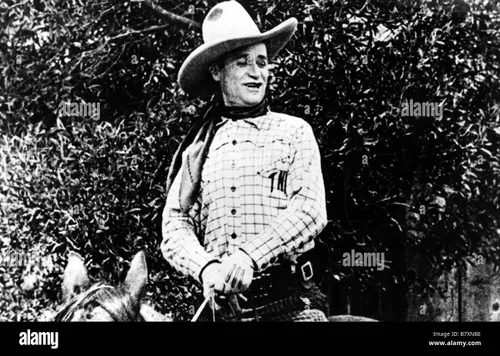
There’s lots of good elected officials and civil servants that truly want to improve government and society.  The problem is, they face the same challenges as the average voter when trying to pass good legislation or regulations.  They must fight against the “political wind”.  They are forced to play the “If you want me to vote for that, I need you to vote for this” game and all kinds of other politically motivated shenanigans.  This really slows down the whole process.  This reminds me of a quote by Will Rodgers, the singing cowboy from the 1930s.  He would over hear some folks arguing about politics and he’d come up and say, “Just be glad you’re not getting all the government you’re paying for”.

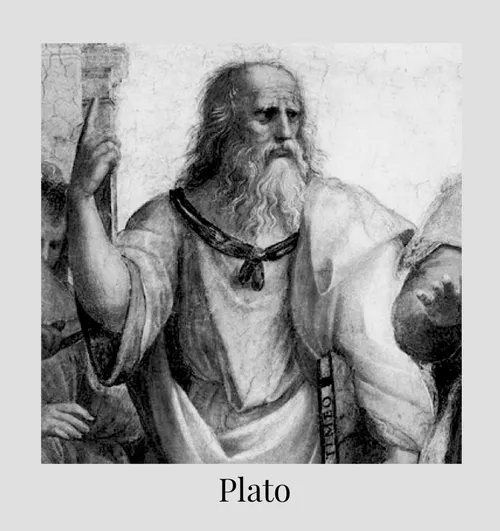
When I’m with a group of friends and someone starts talking politics, I like to play a little trick on them to add some perspective.  I give them a quote by a very famous person and ask them to try to guess that person.  The quote is, “The petty thieves we hang, but the really good ones we elect to public office”.  And, the answer is:

Plato! 

Yes, Plato said this in not those specific words about 2400 years ago talking about one of the first republics on earth.  Yes friends, it’s always been this way.  Today’s news is really nothing new.  Our American forefathers knew this, and the American constitutional federal republic is their attempt to get free capitalism right.  Give the people complete freedom within the bounds of not hurting each other with a government designed to keep greed under control.  Not an easy thing to do.  Give a person a position of power and you increase the likelihood of greed getting the best of them.  It’s just the way of the world. I guess I really don’t hate politics, per say.  I just hate all the lying that many politicians depend on to get votes.  Fact is, they won’t lie so much if fewer folks believed them.  Well, like I said, it’s just the way of the world.