This trip was really special for me this year. The quality of the invited scientists and frequency of presentations and field trips, under water and above, was exceptional. Plus, a whole lot of good diving every day with the Sea Saba crew rounded out the experience. The trip was a bit over-shadowed by not having my great friend Barry along. Barry went along with me on most of these trips for the last 12 years, but he passed away this year. Being a nationally acclaimed brewer himself, Barry would have especially enjoyed the exceptional beer from the new Deep Dive brewery. I certainly did!
Here’s a short review of the presentations and science I participated in.
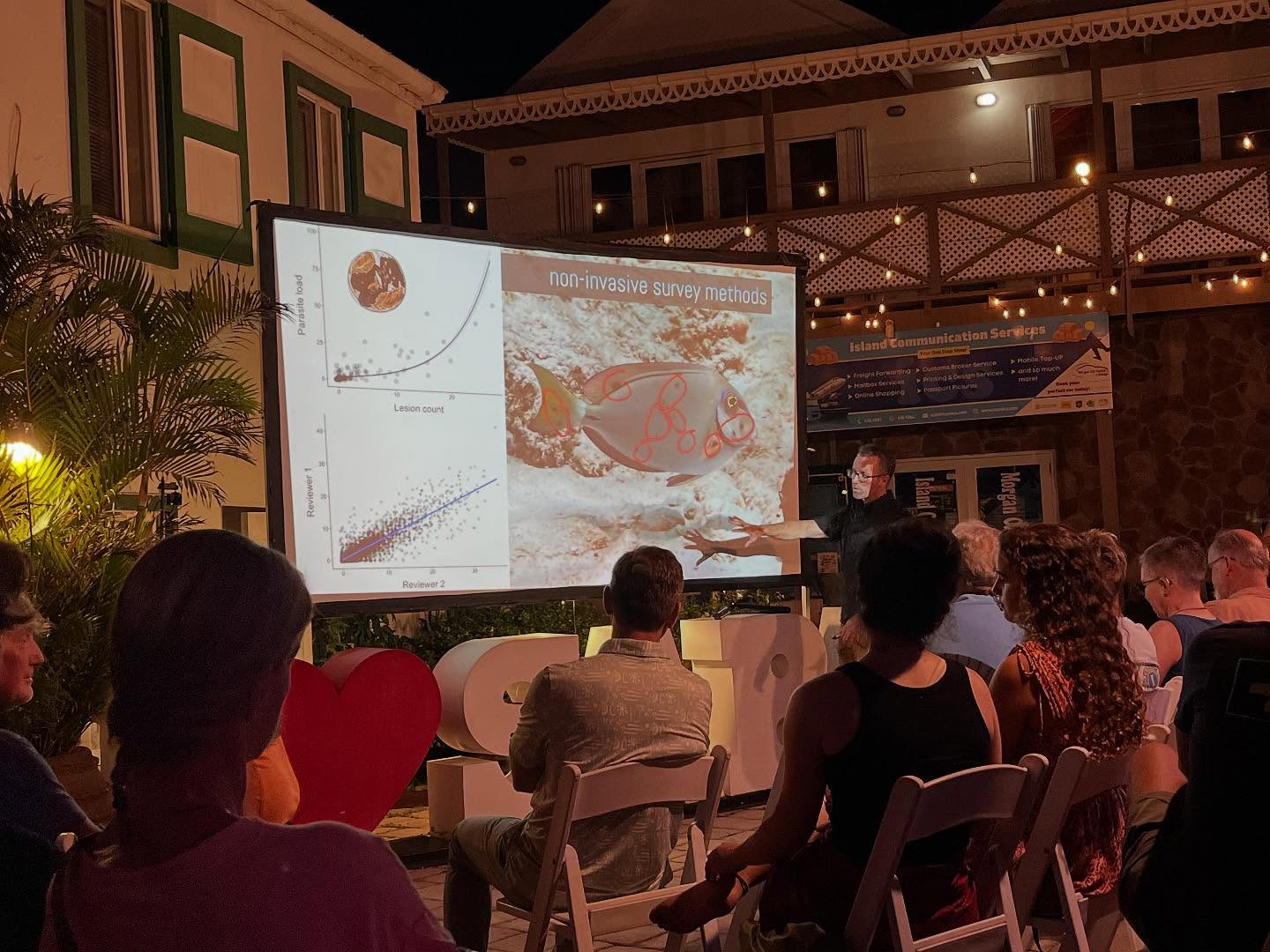
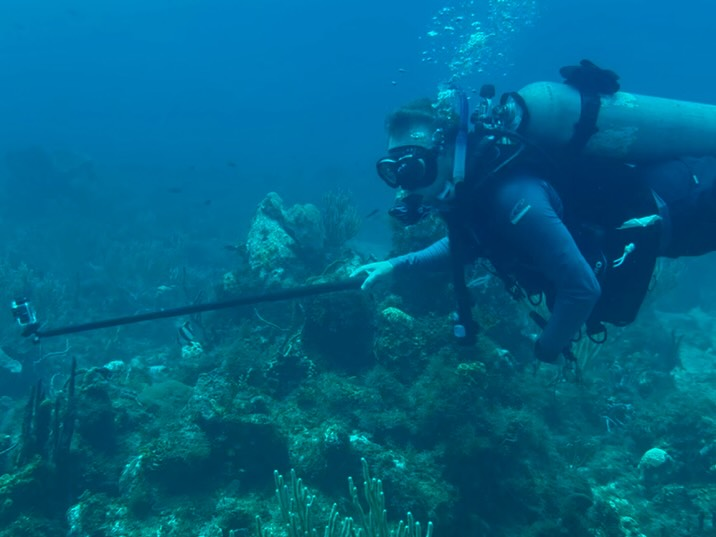
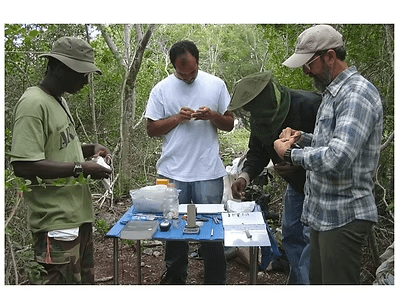
Dr. Pieter Johnson is a disease ecologist who aims to understand the pervasive yet cryptic role of parasites in pathogens in ecological systems. In the photos above, Dr. Johnson provides an overview of the parasite problem, then leads us in a survey on the reef to count surgeon fish with the black spots that indicate presence of the parasite.
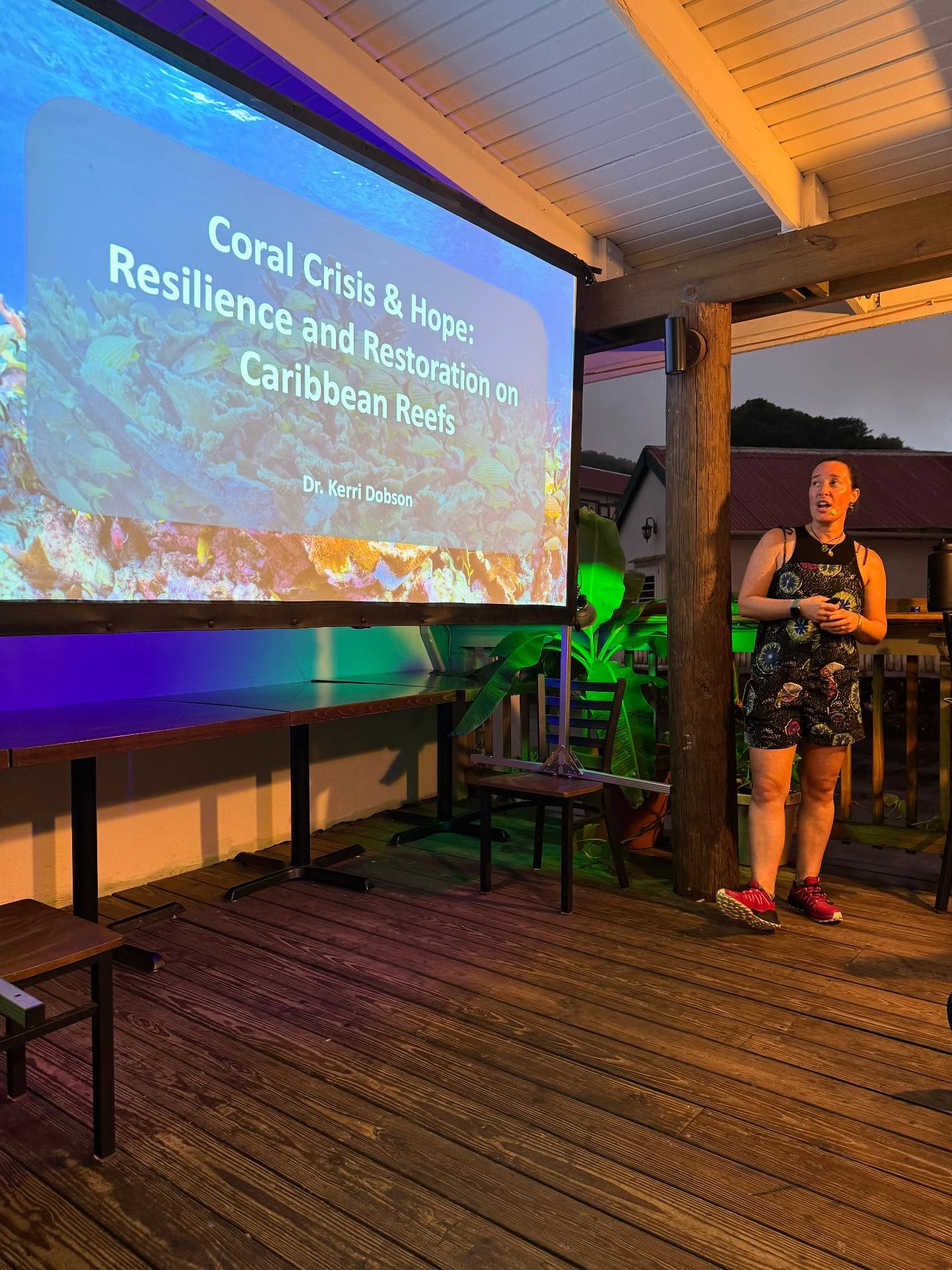
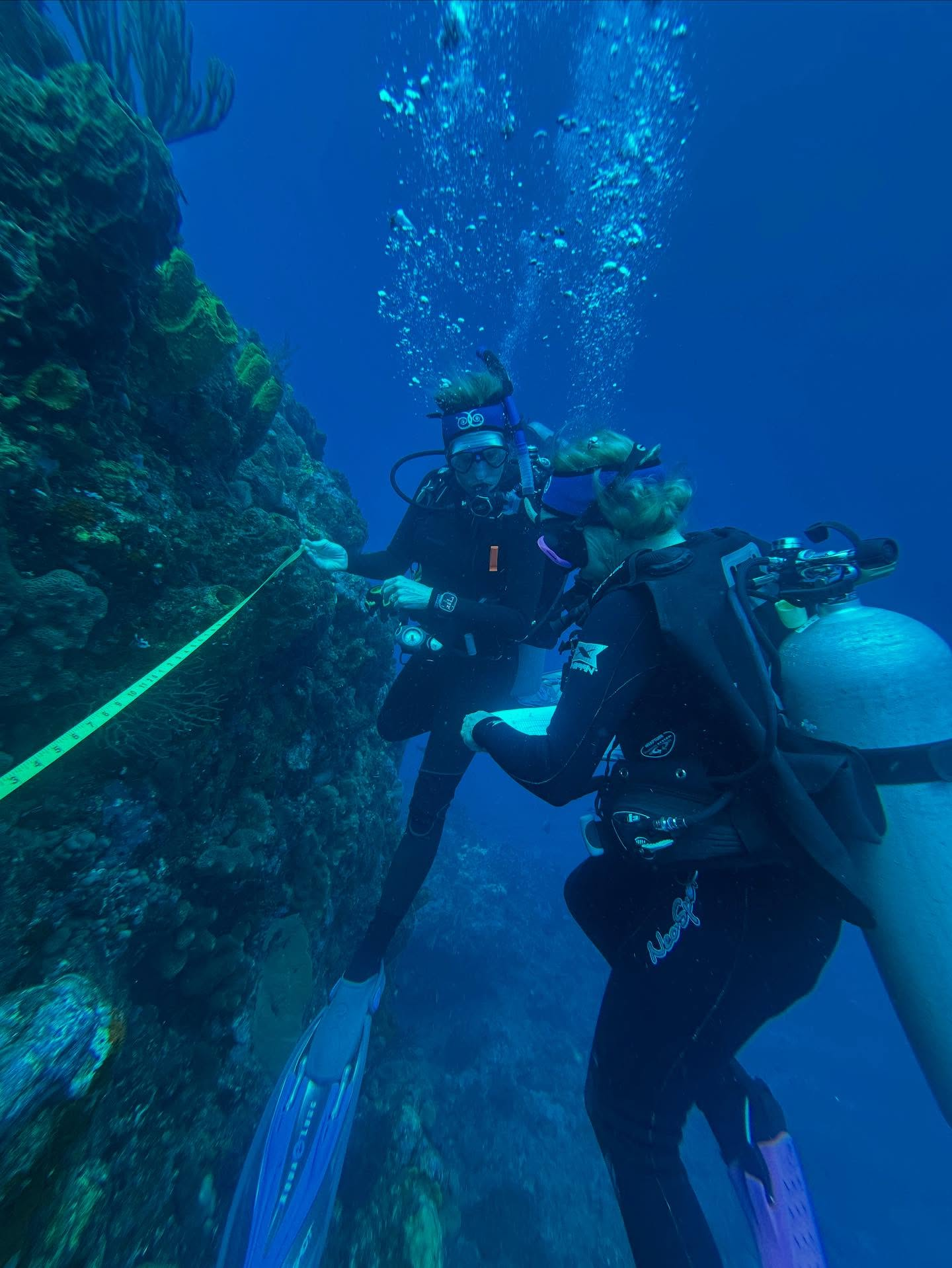
Kerri Dobson is a marine biologist with expertise in coral reef ecology and conservation. Her presentation explained how different types of algae may encourage of discourage the growth of coral polyps. The next day, Ms. Dobson lead us on a survey of algae types on the reef.
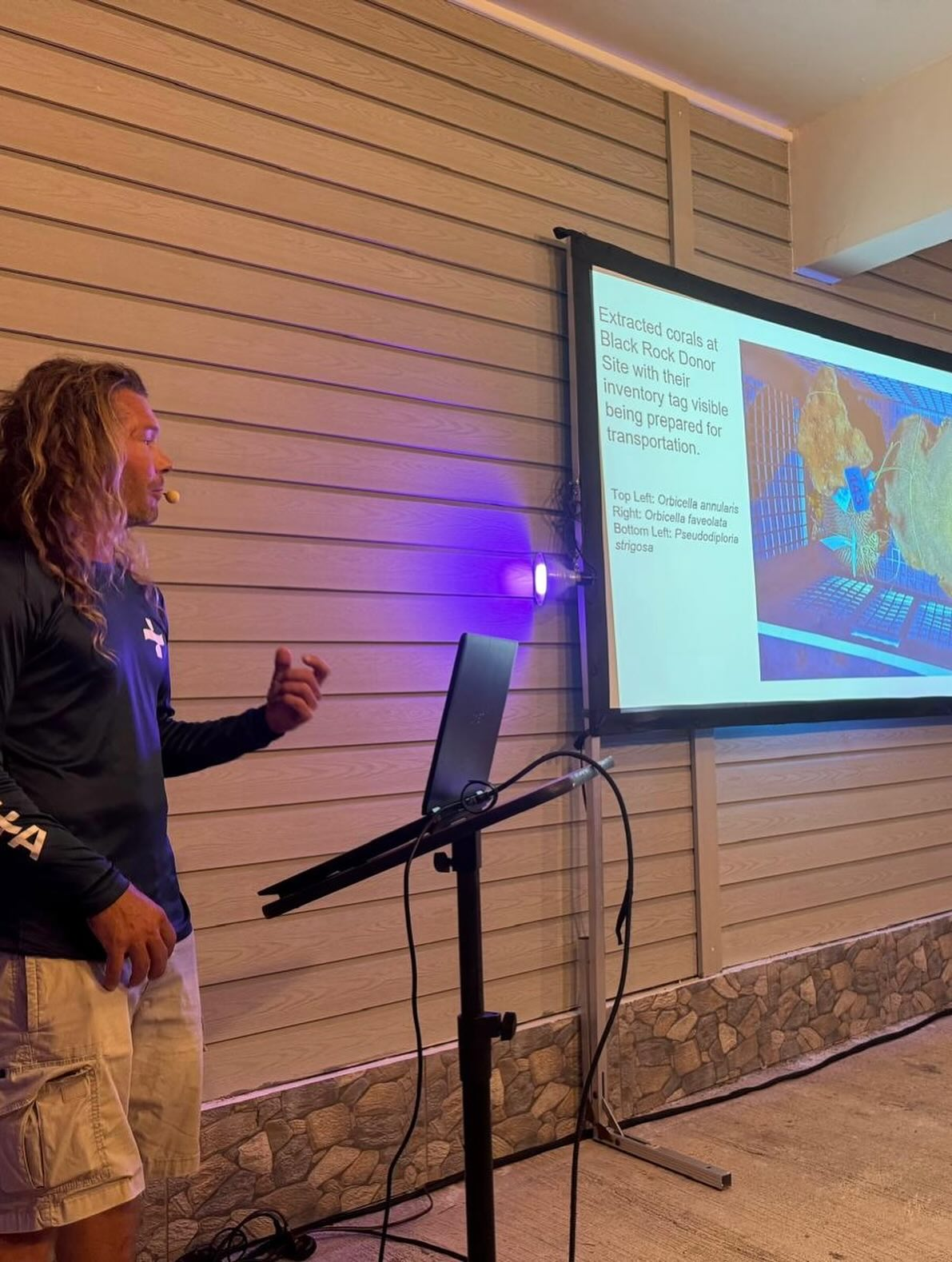
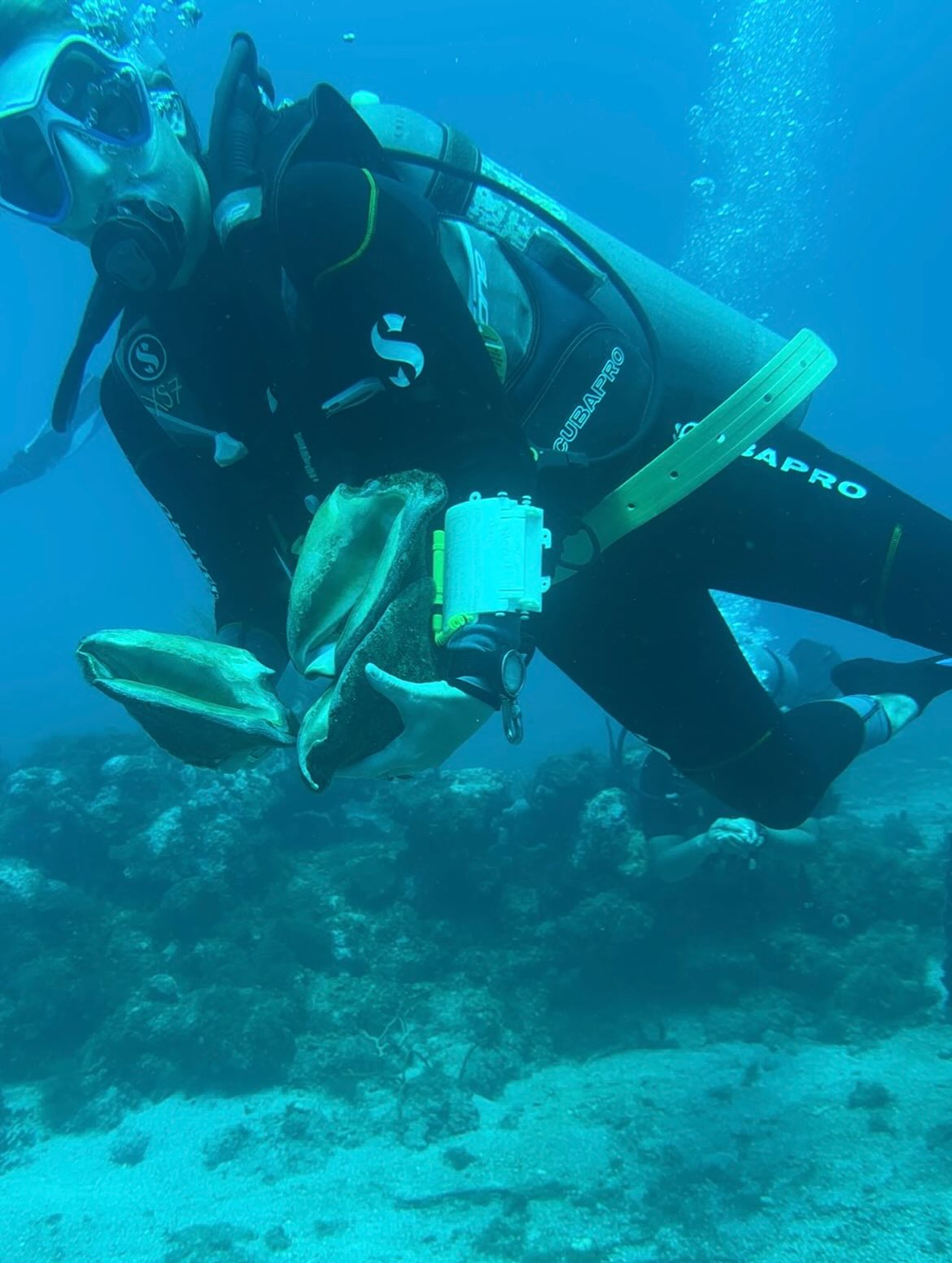
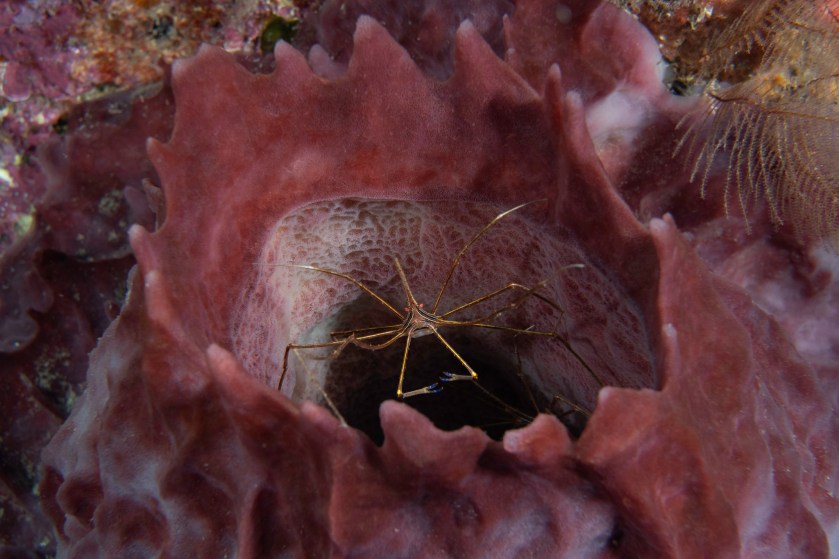
Joe Oliver is the Director of Restoration Operations at Coral Vita, a pioneering organization dedicated to revitalizing the world’s coral reefs. Joe lead us in relocation of invertebrates from the new harbor site to another reef. In a previous dive, they relocated many corals to the protected reef. While many divers focused on the queen conchs, I choose to gather up a bunch of hermit crabs and one arrow crab. These small crabs, being a bit more delicate, Joe personally placed on the protected reef. I was surprised the arrow crab made it alive, but it did!
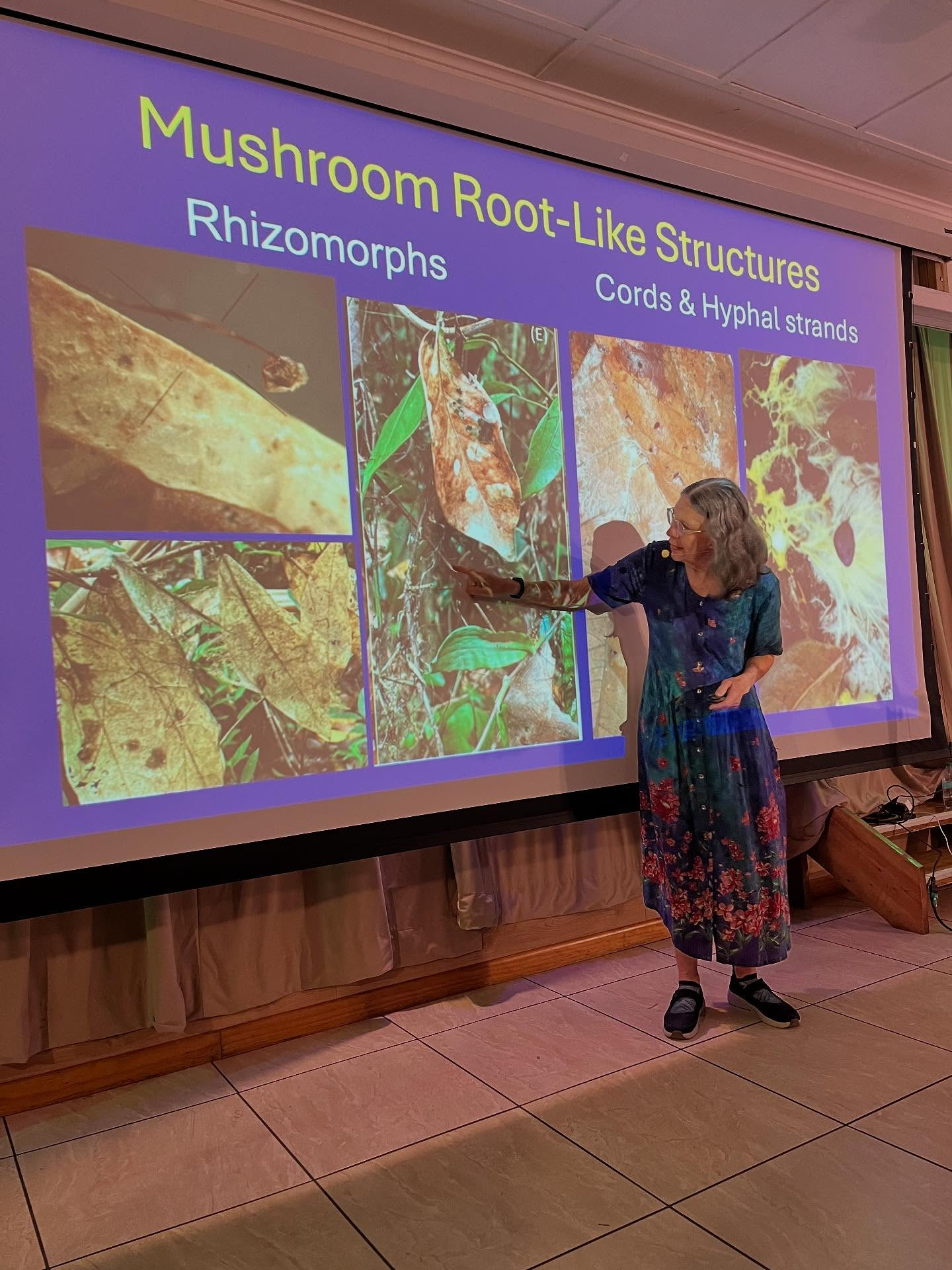
D. Jean Lodge identifies and studies the roles of mushrooms in wet tropical forests of the Caribbean Basin. We learned how mushrooms and other fungus have so many benefits.
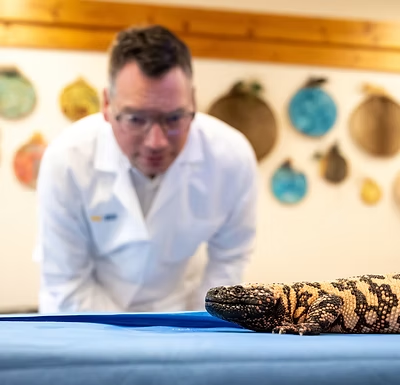
Tim Cernak is an Associate Professor of Medicinal Chemistry at the University of Michigan exploring the role of chemistry in conservation. Tim explains how his background in cancer research is applied to conservation efforts.
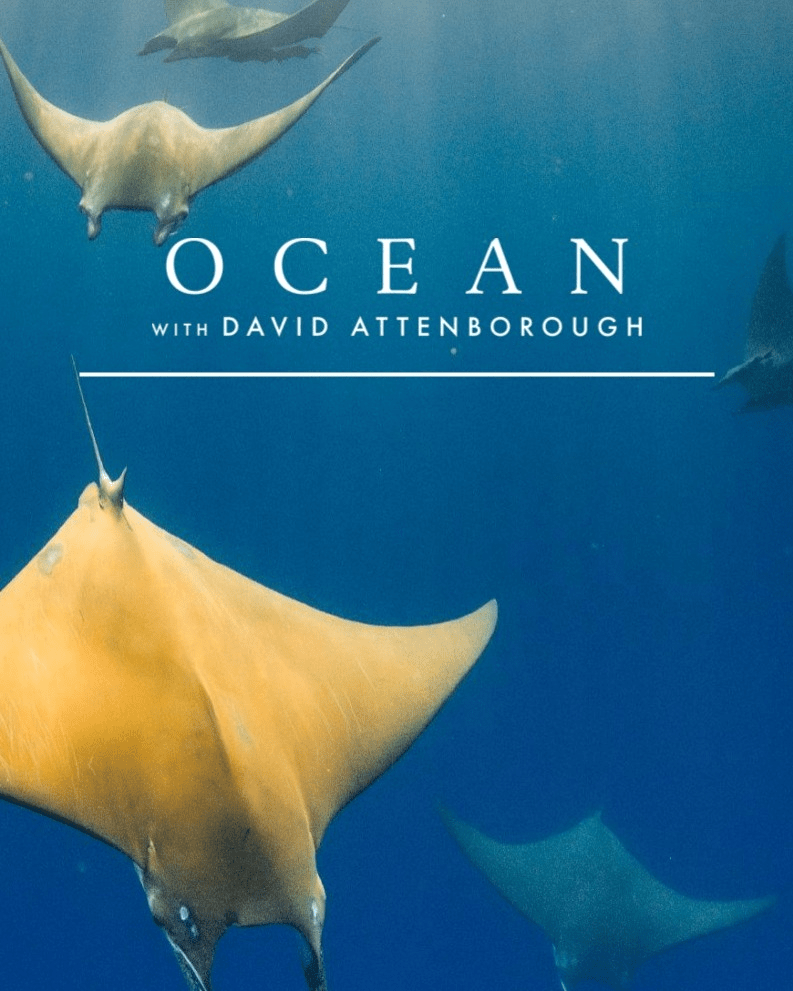
One of the major Sea & Learn events was the pre-release screening of David Attenbourough’s latest movie. A great dinner was provided and the school drama club provided a wonderful little dance number before the show. Even after attending Sea & Learn for 21 years, I am still overwhelmed by the amazing content the foundation delivers every year.
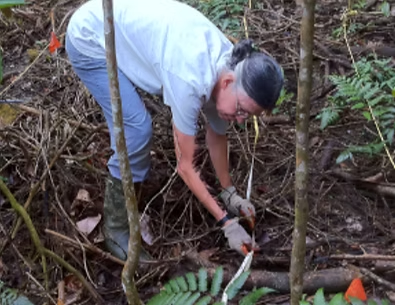
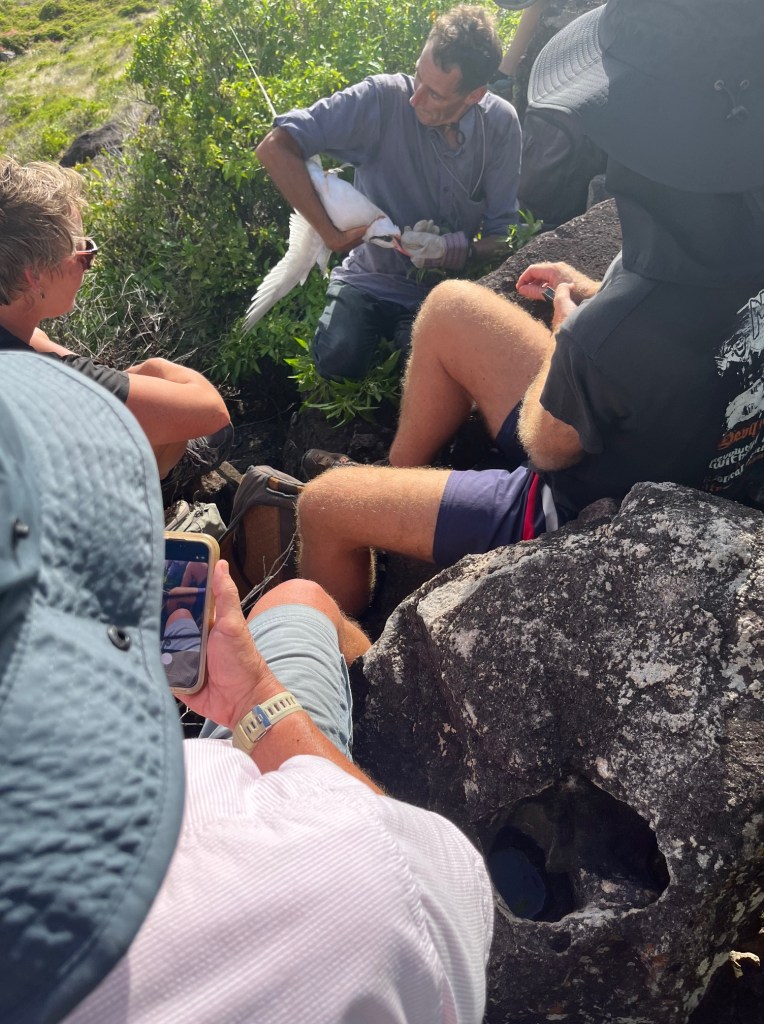
Here, we are perched half way up a mountain with biologist Michiel Boeken tagging a red billed tropic bird. Fun climb and learning experience!
Joe Wunderle provided a great presentation on Caribbean Birds and Hurricanes: Responses, Resilience, and Conservation. As an Emeritus Research Wildlife Biologist with the USDA Forest Service’s International Institute of Tropical Forestry (IITF) in Puerto Rico, Joe has more than 40 years of experience teaching and conducting research throughout the Caribbean.
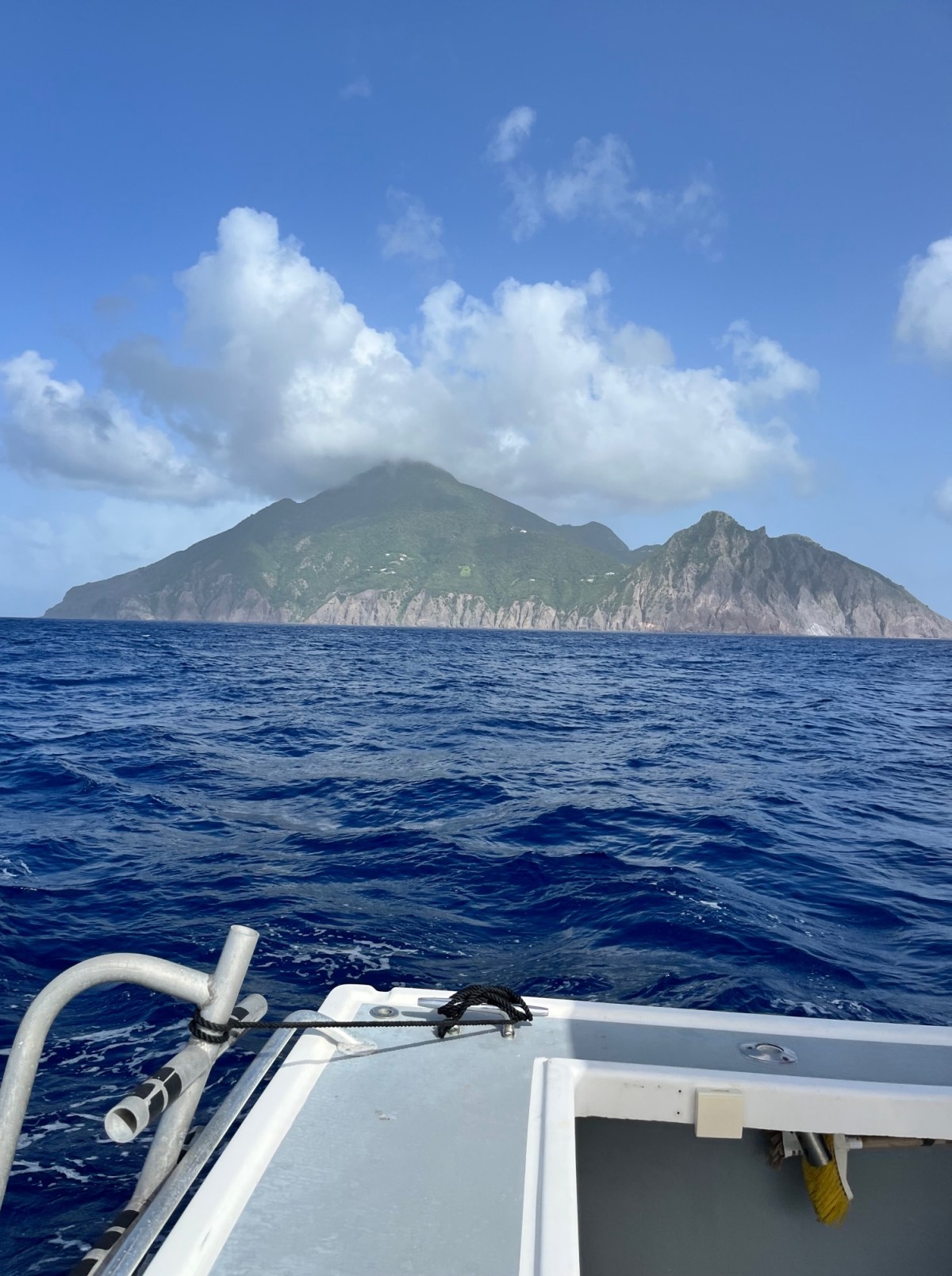
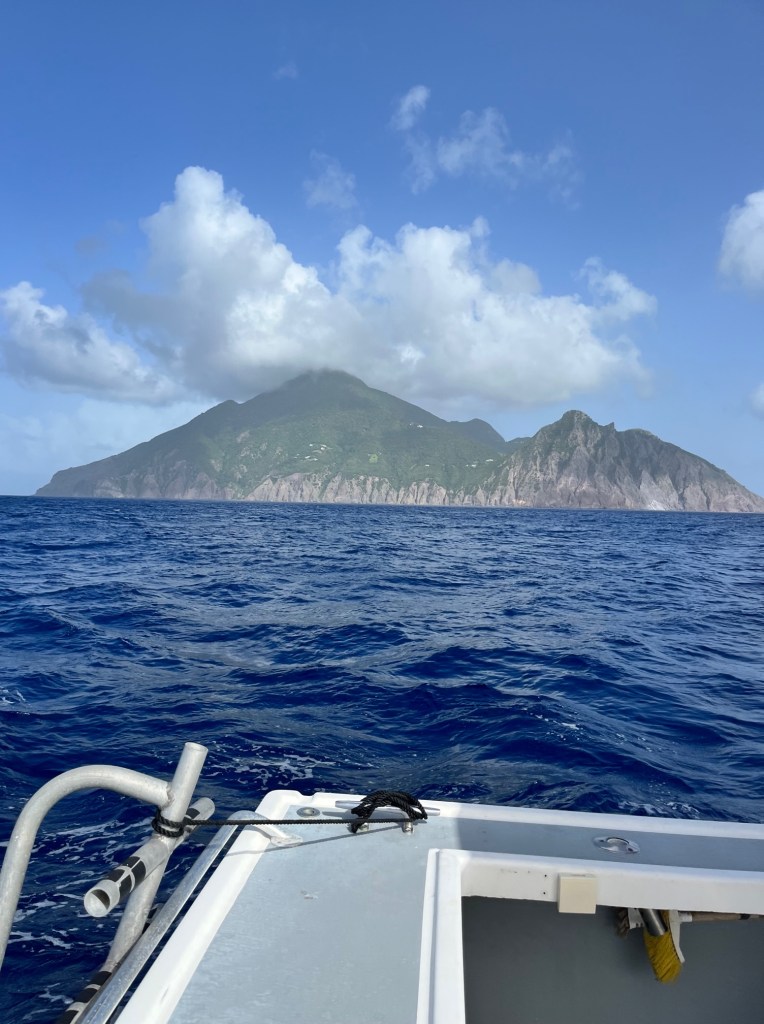
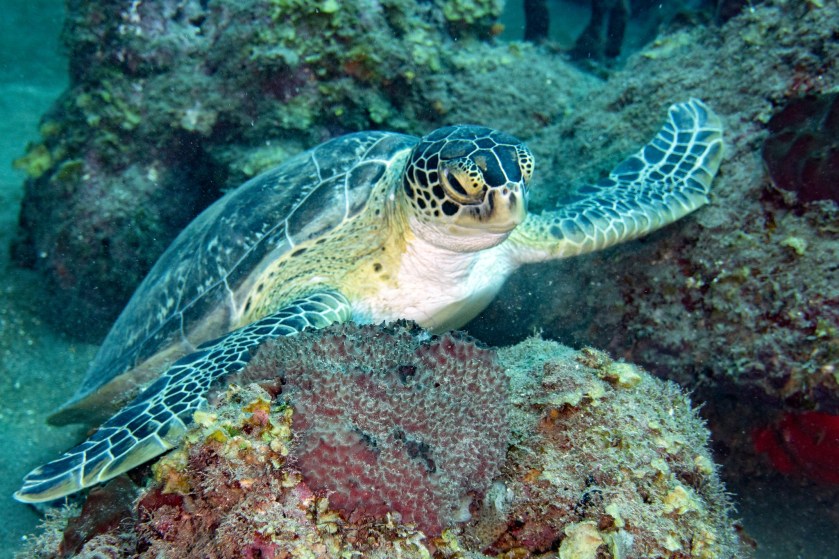
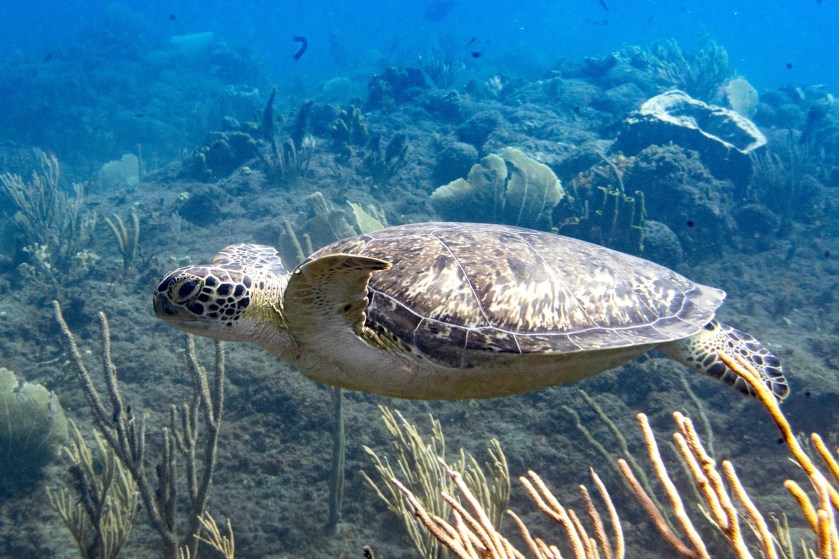
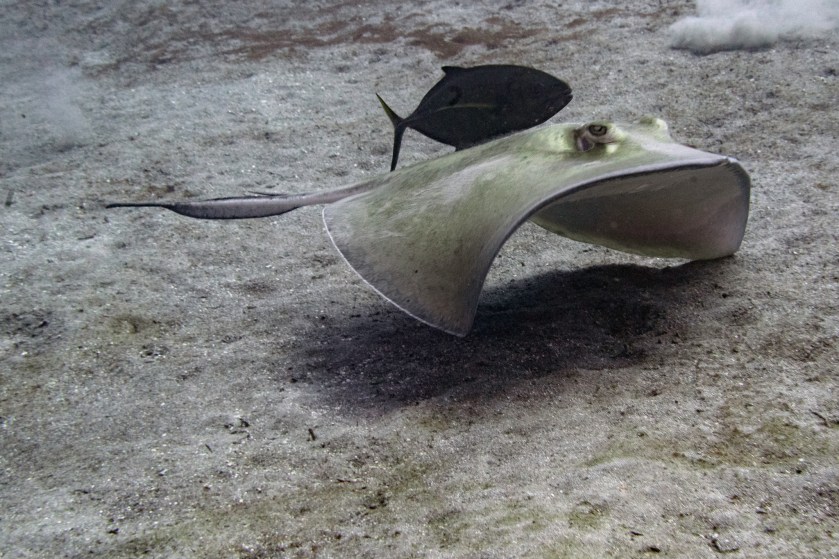
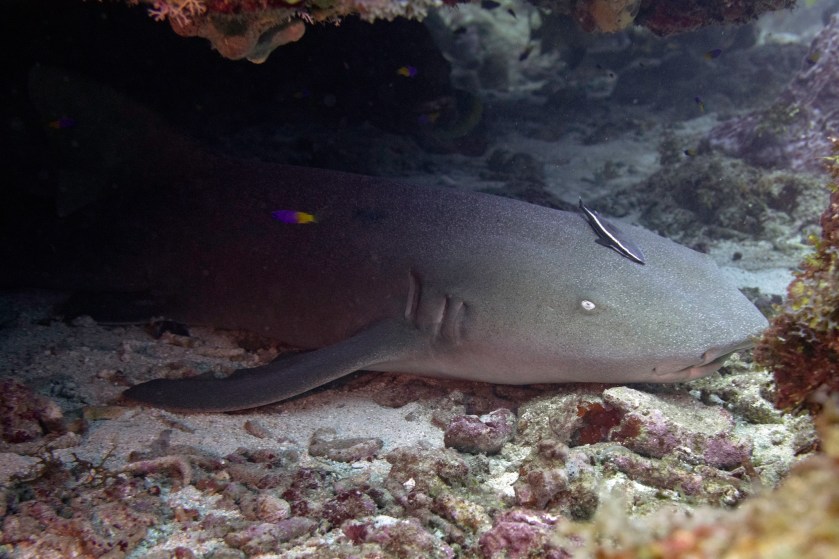
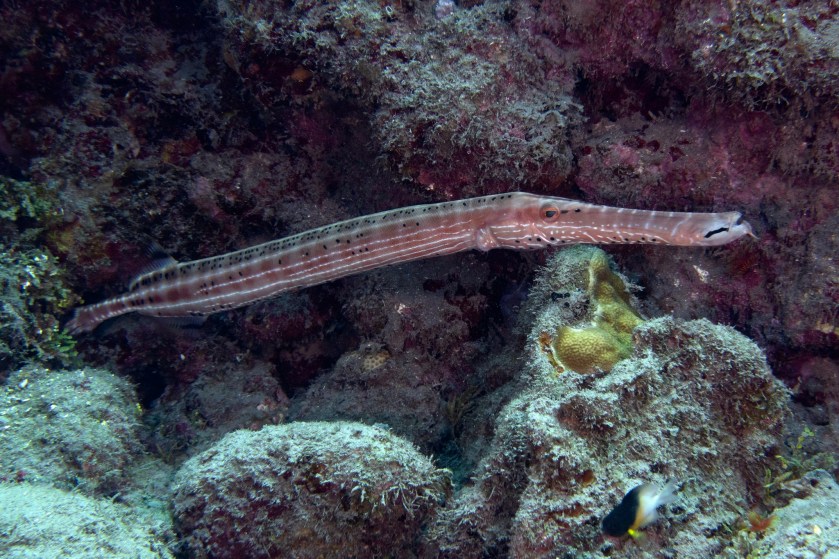
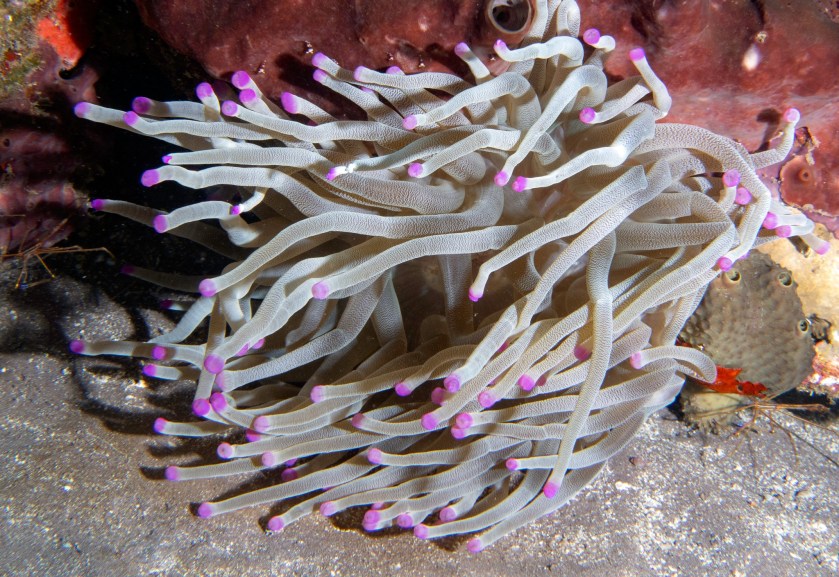
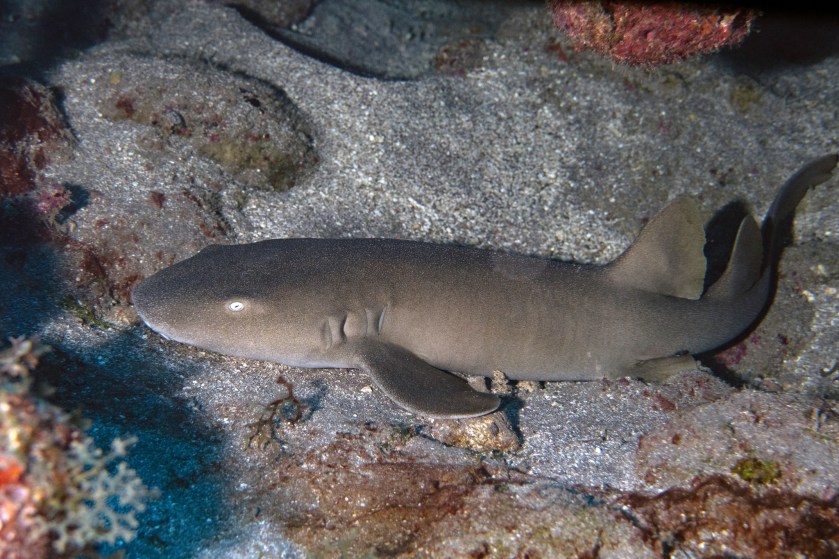
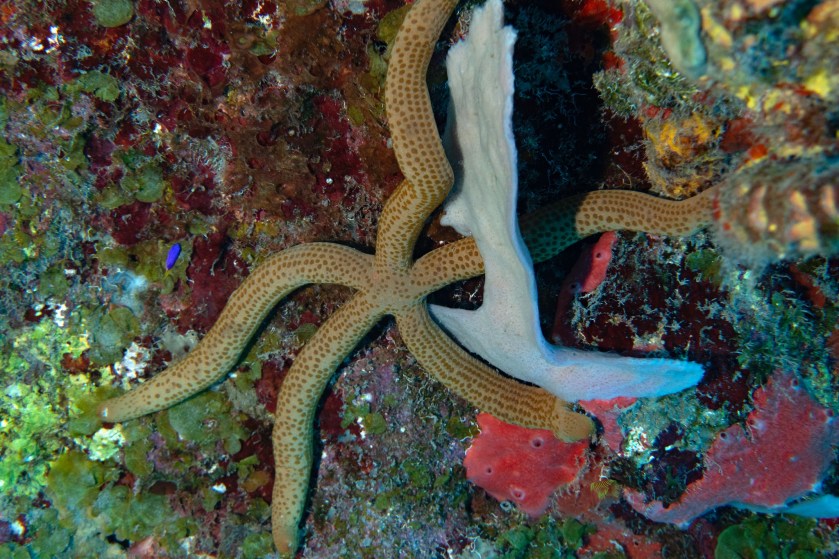
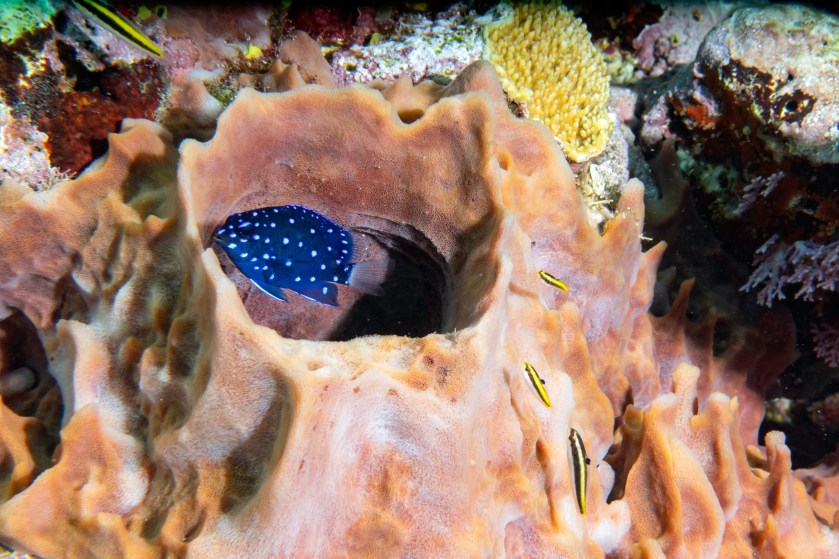
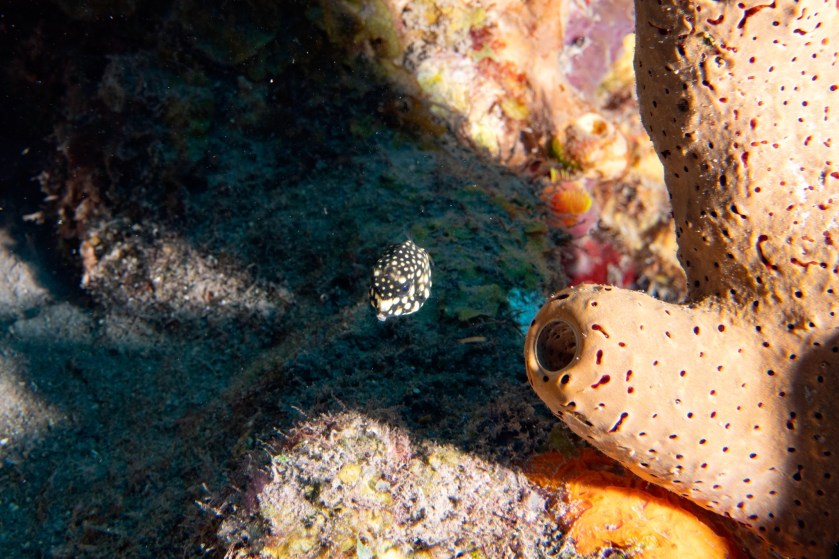
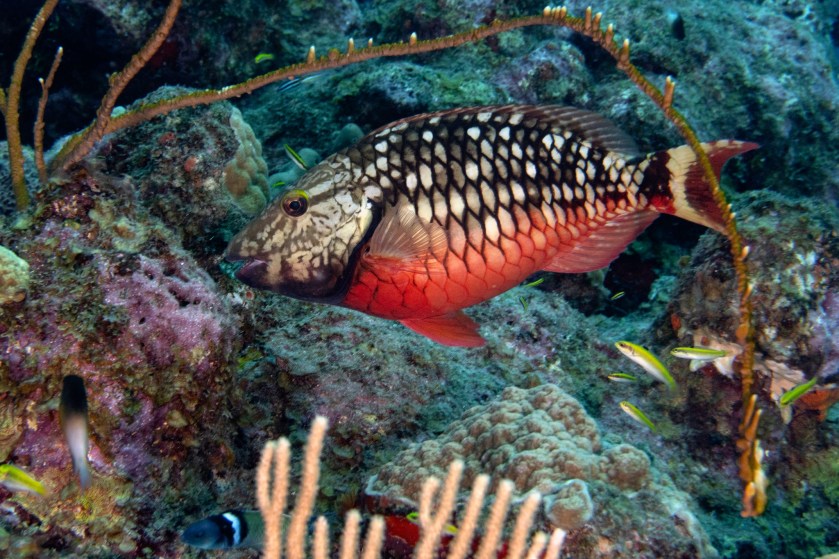
And then there was the diving! The thing I love most about diving on Saba is the diversity of the dive sites. Saba has geologic reefs on the leeward side, biologic reefs on the windward side, sea mounts (The Pinnacles), patch and loaf reefs, turtle grass flats, and walls. This means a wide variety of fish and sea life. Here’s some photos taken during my trip from my long time Saba friends Beth and Tom:
Here’s some shots my friends Beth and Tom got on our dives together.
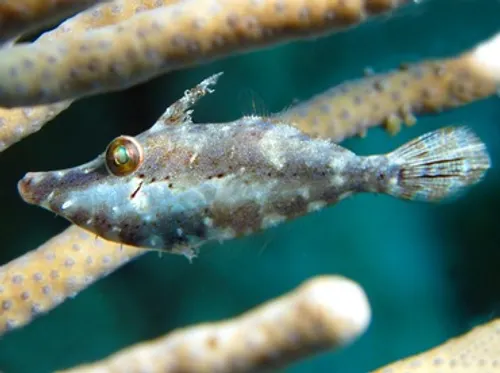
One exceptional experience this trip was the sighting of multiple slender file fish on the Tent Deep site. Before this trip, I had only seen two of them my whole life. On Tent Deep I saw six!
Slender file fish – About two inches long full grown and highly camouflaged to hide in sea fans. Very hard to spot!
Lost two days of diving due to tropical storm Jerry, but that just allowed some quality “island time”. Some of which was spent at the Dive Bar 🙂
The Dive Bar next to Julianna’s Resort features excellent draft beer from Deep Dive Brewery.
Special thanks go out to Lynn, John, Emily, Andrea, and the rest of the team for their outstanding work at Sea & Learn. Thanks again for the wonderful dinner at Lynn and John’s house!
Wish I could have stayed for more than two weeks. I know of nothing else like Sea & Learn anywhere in the world. Where else can an average guy get to attend interesting presentations, citizen science activities above and below the water, and generally hanging out with world class scientists and naturalists. And all for free! Learn more about Saba, the excellent diving, and Sea & Learn at the links below.
Navigating Life’s Currents: A Kayaker’s Reflection on Anger.
I reflect on a kayaking trip that transformed into a moment of self-discovery and growth. Initially frustrated by an unexpected insidence causing a massive fit of anger, I realize my reactions stem from learned behavior. The experience helped to teach me to face challenges calmly, improving my approach to life’s obstacles and enhancing overall quality of life.
Is it “normal” to get pissed off when things go wrong?
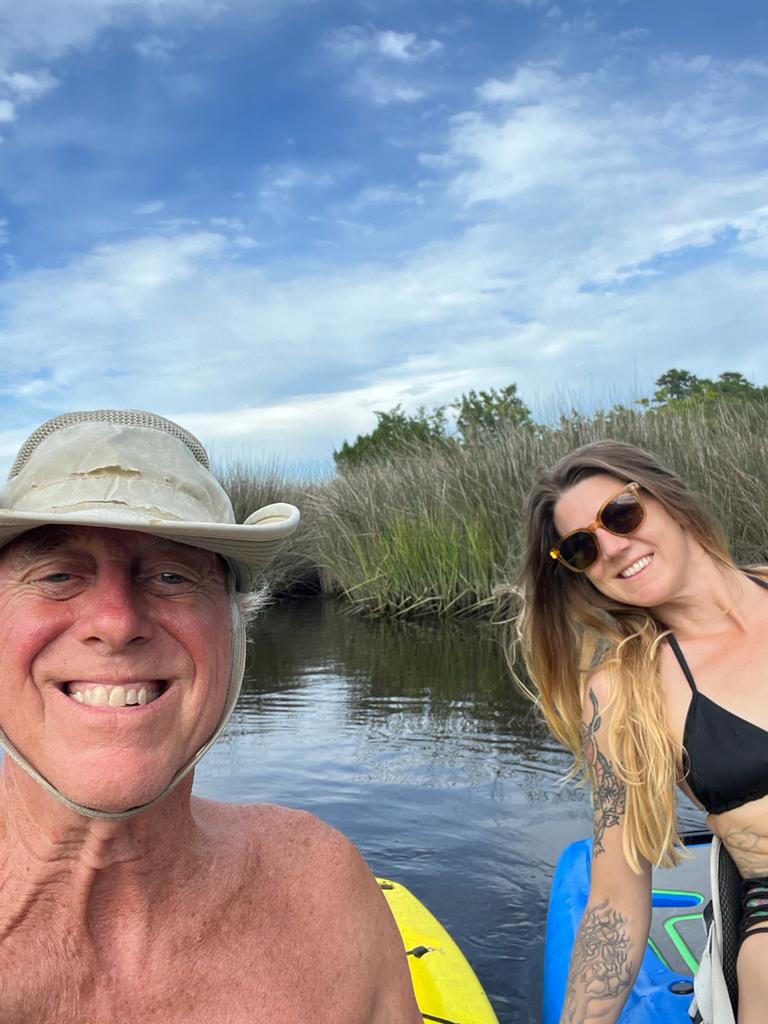
The tide was just starting to move out as I turned my small ocean kayak off the Stono River and up Green Creek. I’ve paddled this tidal creek a dozen times. The marshy banks are full of life and the turtles, dolphins, bonnet head sharks, fiddler crabs, and birds offer great entertainment. The bonnet head sharks were jumping up on shore after fiddler crabs. The little crabs are working the shoreline in the clusters of oysters looking for food and the sharks take advantage of the opportunity for an easy snack. One of the best things about kayaking these tidal creeks is how close you can get to nature.
I always try to time this particular trip to get out there at low tide. That way, the incoming tide helps me get up the creek. Coming back down the creek, the incoming tide is not that strong, so not bad to paddle against. I can always use the workout anyway. But I was prepared for a bit more workout this trip, as I paddled steadily against the ever-increasing rush of outgoing water assisted by gravity in the shallow creek. It’s not a big deal and I know if I just take my time and pace myself, it will be a great trip.
There are lots of small feeder creeks entering Green creek and these can be a lot of fun to explore. There’s a lot of little sand bars with oyster catchers waiting for their favorite food to be exposed by the receding tide. Or maybe catch a glimpse of a diamond back turtle snoozing at the edge of the creek and you get a good look at him before he wakes up and escapes to the water. You just need to make sure the feeder stream is wide enough to paddle in. Up in the narrow sections, maneuvering the boat can get really tricky with a little tidal current running and your paddle getting tangled in Spartina grass.
I turned off the main creek onto a branch that looked interesting. The stream was fairly wide and appeared to go up into the marsh a good ways in a serpentine course. Probably some birds up in there and I wanted to see how far in to the marsh it went. I saw two or three metal posts about 50 foot up the stream that marked the location of submerged oyster beds. Might be some red fish lurking in one of the many bends.
What happened next should not have caught me off guard. I am no expert paddler, I admit, but I have been handling kayaks, canoes, and small boats of all kinds most of my life. But I am a bit of a “sky larker” and was looking for marsh wrens and not noticing the increasing current building in this little tributary. Water always seeks its own level and the force of the current is determined by the amount of water that needs to move with the tide through the space provided by the creek bed. Simply put, the water is going to move a lot faster in the shallower parts of the creek. I noticed the current change when the boat started moving backward and becoming harder to steer. No big problem, I thought. Just dig in with the paddle some to push over the shallow spot.
I began making headway, but the current was increasing as I moved over ever shallower bottom. The surging current began to turn the nose of the little boat to port despite correcting efforts with the paddle. I put the foot-controlled keel fin hard to starboard and while this helped steerage somewhat, forward progress was slowed by putting more keel surface against the current. I was beginning to lose the battle. Thinking quickly, I applied a simple solution. Simply let the boat swing around with the current, paddle back out into the main creek, then start over while paying more attention this time. Just part of the fun, nothing to it, I thought.
My little plan didn’t quite work out. As I let the nose of the boat come around, pushed hard over by the current, at about 90 degrees into the turn the boat stopped dead. With the turn only half completed, I was now broadside to the current and water was coming over the boat. What the hell is going on here? Took me a second to figure it out. My kayak had struck one of the steel posts marking the oyster bed. I was now pinned between the post and the currant and about to capsize the boat, if I didn’t do something fast.
Now, I don’t mind getting wet. But if I go over here, it was too shallow to do an Eskimo roll to right the boat. And, if I bail out of the boat, I’m surrounded by deep pluff mud. In case you are not from here, pluff mud is the Lowcountry equivalent to quick sand. You will sink up to your crotch and lose at least one sandal. I would need to “swim” the boat a mile or two to hard ground, so I could just get back in the tipsy kayak.
I had about three seconds to think about all this. During which time, I was not solving the problem. And this made me mad. Very very mad! And becoming more pissed every second. I don’t think I was panicking. I was just truly and totally pissed off that I was in this situation and not getting out without a lot of trouble. I tried to shove away from the post. I dug hard with the paddle. All to no avail. The harder I tried, the more frustrated and angrier I got. I believe I was yelling out loud most of the sailor words my Dad had taught me. I was completely consumed by anger. That’s when it hit me. Who or what the fuck am I angry at? The tidal creek? The DNR guy that put this marker post here? God? Myself?
I inherited my anger from my Dad. My Dad was a great guy, but he inherited anger from his Dad and thought it was a natural thing to get totally pissed off at anything not going his way. As his first child, I seemed to do a lot of things that didn’t go his way. I got yelled at a lot. And it was not your basic raising of the voice mad at the dumb thing I might be doing, it was top of the lung screaming, red faced, clenched fist, in my face anger. So, I carried on that family tradition with bullying my little brothers, getting into fights at school, and road rage. I thought it was normal. I didn’t even realize I was doing it.
We all get angry sometimes, right? It’s a natural reaction to stuff we don’t like and is hard or impossible to fix, right? Anger is a healthy form of stress relief, right? Do I really think life should be problem free? Or, is anger a learned behavior? My Dad yelled at me a lot when I was a child. That was his way of solving problems. Any situation that didn’t go his way would trigger a stream of loud cussing. He was never violent. Mom would say, “He is just venting”. I know it didn’t make me feel very good when I was the target. I guess others felt the same when I made them the target.
I remember once when I was having a particularly bad tantrum. Don’t remember what it was about, but probably plumbing or painting that wasn’t going right. I always hated plumbing and painting anyway. As I was cooling down from the yelling fit somewhat, my wife casually mentioned, “You know that’s not normal, right?” I had no idea what she meant. Everyone yells and screams when things don’t go right, I know. At least that’s what I thought back then.
Back to the story
It’s truly amazing the amount of crap that can go through your head in a time of crisis. Crisis? It suddenly occurred to me, was this little hassle in the creek really a crisis? I sure am acting like it is. The realization my anger was having absolutely no positive affect on the situation washed over me like a shore break wave. My thinking suddenly cleared. The outcome was no longer a concern if I did my best and faced the consequences like just another adventure. I might get banged up a little, but pretty sure this won’t kill me.
That angry “self” was now gone. There was nothing there now except boat, water, gravity, and that damn oyster bed marker. I tucked the paddle under my arm, gripped the steel marker stake with both hands and gently balanced the force of the water between the marker and my butt in the boat. With a slight twist of my core, the boat was free and gracefully shot out into the main creek and deeper slower moving water. Wow, that was easy!
Back to real life
I felt ashamed for the way I acted for days after that kayak trip. I couldn’t stop thinking about it. I guess I’ve been acting like that all my life and not even realizing it. I was alone in that kayak with no one else to blame and yell at for that situation that, after all, was not “my fault”. Depression was starting to set in with all the negative “self-talk”. No problem, I am use to that. I’ll just need a couple extra beers tonight, maybe. But I really wasn’t ready for what was going to happen next.
So, just a routine drive into work the next morning. Man, the drivers here suck. A friend of mine says there are two kinds of drivers in South Carolina, the idiot in front of you and the ass hole behind you! Didn’t take long to confirm this as the car that just entered the interstate pulls directly over into the left lane going 10 mph below the speed limit, right in front of me. I let them have it with both barrels, screaming, blowing the horn, flashing my lights, and yelling loudly enough to be heard at 60 mph. I was justified since I was doing everything right and they were in the wrong. Then, I felt it happening again.
The same feeling I had in the kayak that day came back like I was watching some other angry fool yelling and screaming. Such massive negative energy. And for what? I was now seeing my angry thoughts and feelings clearly. That other driver was no longer the enemy. My thinking was completely reversed. They’re driving the best they can and none of this is intentional. This is absolutely no different than an oyster bar marker in the creek. Just part of the constant flow of challenges in life. A natural part of life. I had to pull over and think about this for a while.
Revelation
Took me way too many years to realize problems are a natural part of life. I know now, I can’t control that, but I can control how I react. Controlling how I react to problems has become a lifelong project. I am much better now and life has improved appreciably because of this change. People can change. Just as our parents modified our behavior to suit their social standards, we can continue the process on our own accord to become the best person that suits us and those around us. For way too long, I simply accepted myself as, “That’s just the way I am”. Very immature.
I was young and foolish then; now I am old and foolisher.- Mark Twain, a Biography
Conclusion – rest of the boat trip, the rest of life
The rest of that kayak trip went well. Partly because I was paying more attention but also because nature cooperated. I eventually did see a couple marsh wrens, some diamond back turtles, blue herons, tri-color herons, and white ibis. A pod of bottle nose dolphins were fishing about half way up the big part of the creek. Even saw a baby one with their mom. Took me about three hours to go as far as I could up Green creek, but coming back was only an hour with the tide assisting. All and all, a super day! And, came back with a lesson in life that changed me forever.
The problems in life are no different than the rocks and logs in the middle of the stream. How they are handled depends on boat paddling skills learned by training and experience. These obstacles are life itself! Figure out how to go around, over, or through and learn something new. But then, some of us are luckier than others. Quality of life greatly depends on luck. There is a big difference between a careless driver and brain cancer. I am very patient on the road these days, but cancer would probably still piss me off. But I would like to think I’ll get to a point some day where it would not.
And, one last note. You know you’re making progress on your anger management when you start laughing at your fuckups!
The blog serves as a personal journal, sharing insights from the author’s life experiences in finance, health, nature, exercise, history, science, and philosophy. It emphasizes the importance of mindset changes for financial management, maintaining health proactively, appreciating nature, regular exercise, learning from history, and understanding philosophical concepts for personal growth and improved living.
Stand by for some good posts coming up in the new year!
Welcome to my blog. I expect this will be more like a personal journal, but I also want to give some insights I’ve gleaned from my travel experiences and studies. Personally, I’ve taken way too many years to learn some simple things that make life and the world a lot better. I hope to share what I’ve learned to younger people (and maybe some of my fellow old farts) so they will not have to do as much catch up as I have.
I will focus on some basic areas that make the most improvements to a good life:
Financial – Struggling through life, pay check to pay check, is not a good plan. It does not have to be that way. Learning to manage your personal finances more like a business is a much better way. Our economy is designed to promote commercialism and this is the trap. Improving personal finances is as simple as controlling expenses and saving for the future. The main hurtle to this is the change in mindset that is required. For example, what are you thinking about the day before payday – “I’ll have the money to go out to eat”, “I can buy that new dress or sports coat I’ve wanted”, or “This paycheck will give me enough down payment for a new car loan”. Or are your thoughts more like – “I get to pay down that credit card a little more”, “I’ll have a little bit to add to retirement savings”, or “I’ll have a little bit to add to saving for a down payment on an investment property”. A change in your mindset is the way out of the commercialism trap.
Health – A lot of folks, my younger self included, think their doctor is all they need to stay healthy. Go through life until you feel bad, then go to the doctor and they fix you. That’s actually a downward spiral. Look around at the older folks you know. How many of them are sitting around watching TV with too many aches and pains to get out much any more? Truth is, our main stream doctors are only trained to “fix” people. They are not trained to keep you healthy, much less improve your health. I’ve finally learned there is a whole other type of doctor out there that is totally focused on improving health, strength, and endurance. They are the sports medicine doctors. I know, if you’re like me, you can’t afford your own personal sports doctor. But fortunately, these guys write books, have web sites, and podcasts. These guys share their knowledge for all of us to benefit from. I’ll be sharing the best of these I’ve found in future blogs.
Nature – Want to feel like you’re rich even if you’re broke? Go outside and learn the different trees and birds. Breath the air. Go for a snorkel and learn about the fish. Plant some new plants in your yard. Go for a walk in your local park. It’s all free or cheap and does wonders for the attitude.
Exercise – Strength training and cardio are not an option. Find some activities you enjoy doing to keep you going. Move it or lose it! It’s well known we lose muscle mass and blood flow as we age. Work those muscles and get the blood flowing to the brain. That, good sleep, and diet are the keys to better quality of life at any age. Don’t neglect flexibility and balance, as these are the first to go as you get older. “I’ve fallen and I can’t get up!” Don’t let that happen. Yoga does it for me, but there’s plenty of other ways.
History – The German philosopher George Wilhelm Friedrich Hegel famously said, “What experience and history teach is this—that people and governments never have learned anything from history, or acted on principles deduced from it.” Politicians depend on this fact, but we don’t have. Learning human history will demystify and filter the fire hose of news we get everyday.
If you want to be less frustrated by the silly actions of society and governments, start reading more history. I acquired an interest in history when I started traveling around the Caribbean. At first glance, the islands appeared to be “third world” to me. I saw a lot of old run down buildings and folks living below standards I am use to. Upon closer look I realized that was not the case at all. These islands are “old world”, their post Columbian societies being formed a couple hundred years before that of the states. That change in perspective sparked my curiosity about how civilization began and changed shape through time. I started studying the explorations of the European’s discover of the “New World”, but then backed up and got interested in man’s first emergence on the planet. You will find some great recommendations in my reading list that will explain a lot about what is going on in your world today.
Science – I am very interested in many facets of biology and physics. While not much of a scientist (my math skills being way out of date!), I just like to try to understand more about the world and the universe. I’m presently learning more about AI. Did you know that AI development has helped us learn more about how our own brains work? There is just so much to learn and so much more yet to be discovered.
Philosophy – Learning some basic philosophical theories is a good way to learn more about yourself, the folks in your life, and society. I lean towards stoicism for personal and business decisions and Zen Buddhism for life perspective.
Should be required reading as part of any good education. But not in the grade, middle, or even high school level, but in college or trade school. While the young readers will certainly enjoy his creative stories, they do not yet possess the wisdom and life experience to fully appreciate the nuances. London understands human nature, deeply. And animal nature, deeply. And all other nature from dirt to sky, deeply. In his writing, London paints a picture of the thought processes of characters, both animal and human, as the story evolves. These are the exact same internal dialogues we all have as humans and is probably true for the animals. He puts the reader inside the mind of humans and animals with vastly different perspectives on life. A better understanding of how other beings think can only expand the readers’ own perspectives and improve their living philosophies. The attentive reader is exposed to the minds of aboriginal peoples of the south pacific and the Baltic Sea northern lands, the captains and crew of schooners, the gold prospectors who came to the north countries, slaves and freedmen, the colonial businessmen, the privileged, and the adventurer. He takes you inside the mind of the dog, the wolf, and the whale to explore the animals’ view on life. Yes, London’s writing is dated, most stories occurring in the late 1800’s and early 1900’s. But people have not changed much. And those were times of great change – the industrial revolution and the height of colonialism. Much like today with political unrest, the Internet, AI, and such. Lots of parallels to learn from, I think.
I’ve read everything Jack London has written that I could get my hands on. His perspective on life has opened my eyes wider to better enjoy our natural world. This includes a better understanding of the people I meet that love the land, oceans, and animal life that is all around us. I now believe there is a common bond between us all that a lot of folks never learn to appreciate. Most of us will never go on an exploration where death is highly probable. Stories of those who did make us grateful for the accessible wilderness areas we have today.






 The Blog of Tim Schmitz
Leave a comment