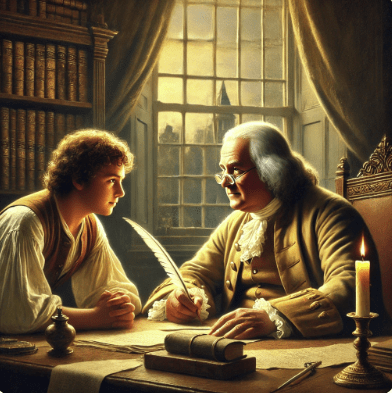
You already know the value of having a mentor, so I won’t get into that. Your first mentor was probably your mother or father, as was mine. That caring person set you on the course you are on today. As I moved ahead in my career I had some great bosses and associates that really helped steer me right. But now, the older I get, the harder it is to find a mentor. As I’ve aged there are fewer older people I know that are on the road ahead of me and younger associates hesitate to advise me, even when they are a lot smarter than me. These smart young folks erroneously assume I already know it all. How silly is that!?
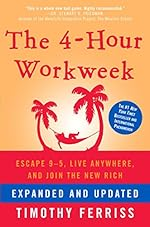
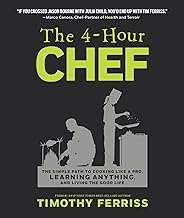
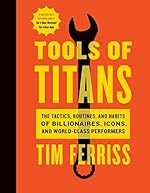
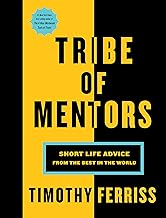
A few years ago, I stumbled upon some great mentors from an unlikely source, the Tim Ferriss books and podcasts. Back when I was learning to do real estate investing, I read Tim’s book “The Four-Hour Work Week”. As an engineer, the book resonated with me in presenting a systems-based process for setting up and operating a business efficiently. I liked Tim’s style, so I read his other great books:
Reading “Tools of Titans” and “Tribe of Mentors” opened my eyes to the lives of some of the most successful people in the world. Especially enlightening is the way Tim would deep dive into their daily personal routines –- things they did to control stress, stay healthy, and be productive –- while running some very successful projects. I got an awareness of how these high-profile folks were not much different than us “ordinary” folks. Their main difference is their skill set, but their daily life is not much different than anyone else.
I have continued to find more excellent mentors in Tim’s podcasts. I have listened to a lot of podcasts and Tim’s stands out due to his exceptional interviewing skills and the wide variety of folks he has on. No matter what field you’re pursuing, you are bound to find someone Tim has interviewed that is a leader in that field.
I’ve applied a lot of the gleaned advice in my own life. If you’re interested, you can find a lot of it here Simple Stuff That Changed my life.
Tim also writes a good blog. Go look for yourself: https://tim.blog/ and pull down the pod cast “The Tim Ferris Show” from your favorite podcast site. Learn more about Tim Ferris here: https://en.wikipedia.org/wiki/Tim_Ferriss. I encourage you to give Mr. Ferriss a try if you’re having trouble finding good folks to bounce your questions and ideas off of.
“All I Really Need to Know I Learned in Kindergarten.” Robert Fulghum
Attention world governments! I have an especially important message from all the good people of Earth. WE DON’T WANT YOU TO WAGE ANY WAR ON ANYONE FOR ANY REASON! We are all incredibly surprised you do not know this, so the purpose of this message is to let you know beyond all doubt.
You know all your wars are motivated by your own fears. We have no such fears. We here in the NATO countries wish no harm on our friends in Russia, China, North Korea, or anywhere else. Likewise, we here in Russia and North Korea never asked our government to waste our dwindling resources to fight off NATO countries. We are all the same, just regular folks trying to get by. Wars are not started by the people, but by governments fighting their own battles!
We know there’s still a lot of us that are under the influence of our government’s powerful propaganda campaigns. Most propaganda aims at putting the fears of the government on the people – “We must protect ourselves from Communist takeover.” or “We must protect ourselves from Western imperialism.” We, the good people, are smart enough to recognize this propaganda as a diversion tactic to keep us from seeing the real goal of most of our governments, which is, national expansion to benefit the elite few who fear losing power! There are more of us that realize this all the time, so these tactics will not work for much longer. We have learned to recognize propaganda through critical thinking, exposure to different perspectives, and historical awareness.
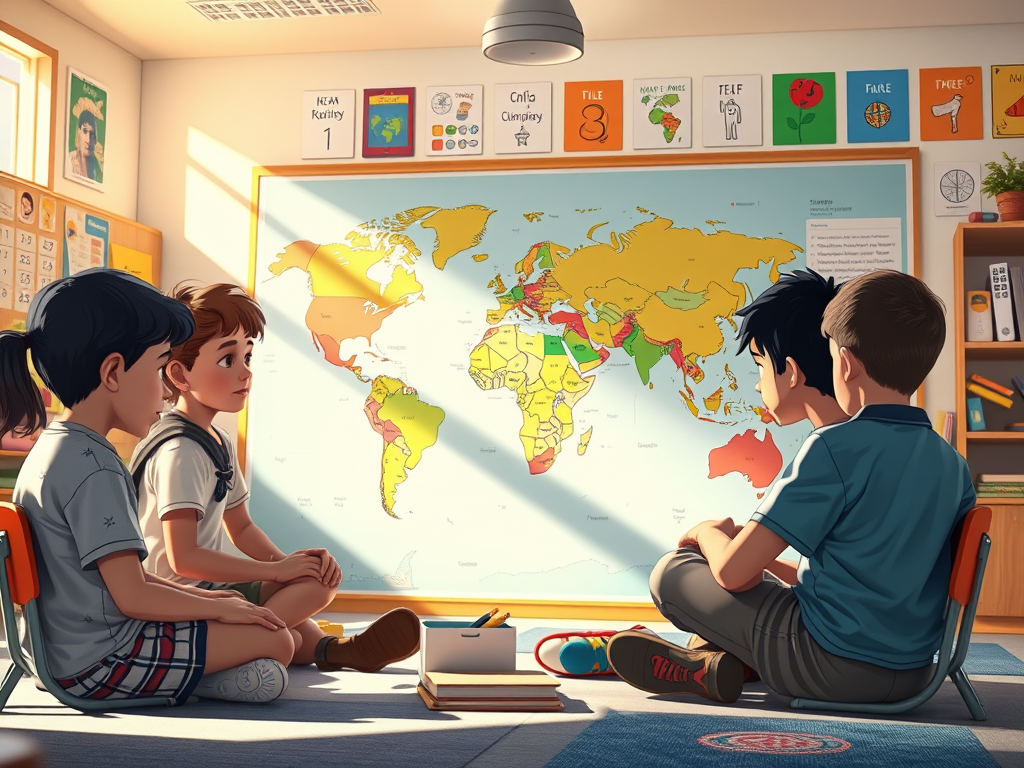
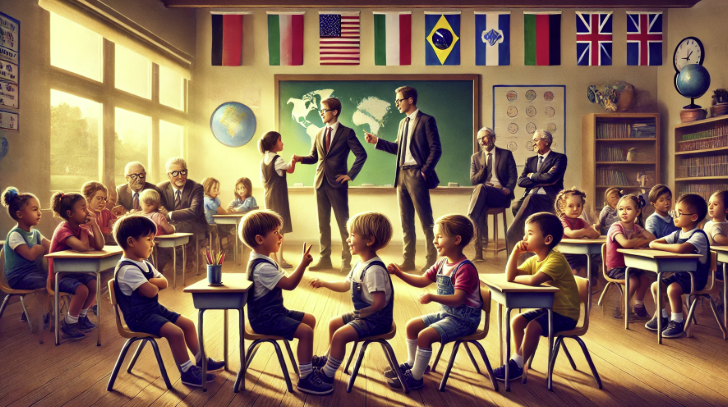
We have had tens of thousands of years of learning to live together. Yes, civilizations have had to fight it out all this time, but there is a point at which we figure out a better way to solve ALL problems. In fact, we’ve learned how to fix all the basic types of problems in kindergarten. You government guys didn’t flunk kindergarten, did you? Let us review the most common problems governments want to fight over and compare each one to a kindergarten equivalent.
1. Geopolitical conflicts and territorial disputes that persist between nations – Two children arguing over who gets to play in the corner with the best toys, with each claiming “I was here first!” or “This is MY spot!”
2. Ideological and religious differences leading to extremism and conflict – Children disagreeing over the “right way” to build a block tower or draw a cat, with each insisting their method is the only correct one.
3. Economic inequality within and between nations, creating instability – One child has many toys from home while another has none, creating tension during playtime when the child with many toys refuses to share.
4. Competition for limited resources, including water, land, and energy – Three children fighting over the one red crayon or the single class iPad during free time.
5. Nationalism and identity-based conflicts that resist compromise – Groups forming based on arbitrary distinctions like “blue table kids” versus “green table kids,” with each group developing loyalty and excluding others.
6. Historical grievances and unresolved injustices that fuel ongoing tensions – “I’m not sharing with Sam because yesterday he took my juice box and didn’t say sorry.”
7. Militarization and arms races, including nuclear proliferation concerns – Children building increasingly elaborate “defensive” pillow forts, eventually taking all the cushions, and leaving nothing for others.
8. Failed states and regions with weak governance that become conflict zones – Chaos erupting when the teacher briefly leaves the room and the assigned “class monitor” can’t maintain order.
9. Terrorism and non-state armed groups operating across borders – A child disrupting others’ games or destroying their artwork because they weren’t included.
10. Climate change impacts that can trigger resource conflicts and migration crises – Disputes arising when outdoor recess is canceled due to rain, forcing everyone to share limited indoor space and toys.
I won’t insult your intelligence by explaining the fixes for each of these as I know you learned them from your parents and teachers many years ago. And I realize these simple solutions get lost in the complexity of adult life. But, as our leaders, you need to function more like the teachers than the children! If you kids don’t sit down and shut up there will be no snack time today!
World leaders, if you still don’t get it, you need to read more history and learn from it this time. The longest lasting empires; Roman, Byzantine, Ottoman, and the China dynasties; all ended in conflict due to not solving basic kindergarten problems. The world now produces more than enough food, clothing, shelter, and medicine for everyone. So, what is all the fighting about? Expansionism and imperialism are just counties acting like bullies on the playground. The rest of the class sees what you’re doing and really wants you to “grow up” and face your insecurities! How many times did the teacher say, “We all just need to learn to share”?
So, you might be reading all this and thinking, “Yes, I have studied history and know all this to be true. But I am only a mid-level congressman (or member of parliament, MdB, councillor, etc.) what can I do?” That’s an easy one. Grow a pair and stand up for what you believe!
The blog serves as a personal journal, sharing insights from the author’s life experiences in finance, health, nature, exercise, history, science, and philosophy. It emphasizes the importance of mindset changes for financial management, maintaining health proactively, appreciating nature, regular exercise, learning from history, and understanding philosophical concepts for personal growth and improved living.
Stand by for some good posts coming up in the new year!
Welcome to my blog. I expect this will be more like a personal journal, but I also want to give some insights I’ve gleaned from my travel experiences and studies. Personally, I’ve taken way too many years to learn some simple things that make life and the world a lot better. I hope to share what I’ve learned to younger people (and maybe some of my fellow old farts) so they will not have to do as much catch up as I have.
I will focus on some basic areas that make the most improvements to a good life:
Financial – Struggling through life, pay check to pay check, is not a good plan. It does not have to be that way. Learning to manage your personal finances more like a business is a much better way. Our economy is designed to promote commercialism and this is the trap. Improving personal finances is as simple as controlling expenses and saving for the future. The main hurtle to this is the change in mindset that is required. For example, what are you thinking about the day before payday – “I’ll have the money to go out to eat”, “I can buy that new dress or sports coat I’ve wanted”, or “This paycheck will give me enough down payment for a new car loan”. Or are your thoughts more like – “I get to pay down that credit card a little more”, “I’ll have a little bit to add to retirement savings”, or “I’ll have a little bit to add to saving for a down payment on an investment property”. A change in your mindset is the way out of the commercialism trap.
Health – A lot of folks, my younger self included, think their doctor is all they need to stay healthy. Go through life until you feel bad, then go to the doctor and they fix you. That’s actually a downward spiral. Look around at the older folks you know. How many of them are sitting around watching TV with too many aches and pains to get out much any more? Truth is, our main stream doctors are only trained to “fix” people. They are not trained to keep you healthy, much less improve your health. I’ve finally learned there is a whole other type of doctor out there that is totally focused on improving health, strength, and endurance. They are the sports medicine doctors. I know, if you’re like me, you can’t afford your own personal sports doctor. But fortunately, these guys write books, have web sites, and podcasts. These guys share their knowledge for all of us to benefit from. I’ll be sharing the best of these I’ve found in future blogs.
Nature – Want to feel like you’re rich even if you’re broke? Go outside and learn the different trees and birds. Breath the air. Go for a snorkel and learn about the fish. Plant some new plants in your yard. Go for a walk in your local park. It’s all free or cheap and does wonders for the attitude.
Exercise – Strength training and cardio are not an option. Find some activities you enjoy doing to keep you going. Move it or lose it! It’s well known we lose muscle mass and blood flow as we age. Work those muscles and get the blood flowing to the brain. That, good sleep, and diet are the keys to better quality of life at any age. Don’t neglect flexibility and balance, as these are the first to go as you get older. “I’ve fallen and I can’t get up!” Don’t let that happen. Yoga does it for me, but there’s plenty of other ways.
History – The German philosopher George Wilhelm Friedrich Hegel famously said, “What experience and history teach is this—that people and governments never have learned anything from history, or acted on principles deduced from it.” Politicians depend on this fact, but we don’t have. Learning human history will demystify and filter the fire hose of news we get everyday.
If you want to be less frustrated by the silly actions of society and governments, start reading more history. I acquired an interest in history when I started traveling around the Caribbean. At first glance, the islands appeared to be “third world” to me. I saw a lot of old run down buildings and folks living below standards I am use to. Upon closer look I realized that was not the case at all. These islands are “old world”, their post Columbian societies being formed a couple hundred years before that of the states. That change in perspective sparked my curiosity about how civilization began and changed shape through time. I started studying the explorations of the European’s discover of the “New World”, but then backed up and got interested in man’s first emergence on the planet. You will find some great recommendations in my reading list that will explain a lot about what is going on in your world today.
Science – I am very interested in many facets of biology and physics. While not much of a scientist (my math skills being way out of date!), I just like to try to understand more about the world and the universe. I’m presently learning more about AI. Did you know that AI development has helped us learn more about how our own brains work? There is just so much to learn and so much more yet to be discovered.
Philosophy – Learning some basic philosophical theories is a good way to learn more about yourself, the folks in your life, and society. I lean towards stoicism for personal and business decisions and Zen Buddhism for life perspective.
Basically, politics is not real. Political rhetoric is just another form of advertising.
Here’s a fact, I think, a lot of folks don’t consider. Most politicians are lawyers. Lawyers are trained to win their case, not to find the truth. When you listen to politicians, you hear someone trying to “win” for their side. Politician’s main goal is to win votes. Sometimes they support programs to win votes inadvertently end up helping society. But their main goal is to promote the party and get themselves elected. I have nothing against lawyers, when they are practicing law. A lawyer should also be an historian, a philosopher, and a sociologist when he/she seeks public office
A large part of lawyer training is the study of rhetoric. Politicians trained as lawyers use classic rhetorical strategies to persuade or motivate specific groups of voters. Many of society’s problems are caused when these audiences are unaware they are being rhetorically manipulated.
When two sides are in a political argument, they only state facts that sway opinion towards their side being the “winner” of the argument. Consequently, important facts that do not support either side are not brought up for consideration by voters. Voters need to do their own research to know all the facts, but most don’t.
The general news media mixes political and factual reports, so it is hard for folks to know the difference. Most folks depend on the news media for decision making information and for how they will vote. Since most folks don’t study history or do their own research, they are easily manipulated by the politicians and corporations who feed the media biased information.
Maliciousness and incompetence look the same to the outside observer. When a politician does wrong the opposition can feed the media whatever version of the event that best supports their side. The media, being prone to jumping to conclusions, will further confuse what really happened. The media’s main goal is to acquire and retain their audience. They will report news events that attract the most attention to do so. Reporting useful information is secondary as that can be dry and boring. And many are downright slanted to one political side or the other. Some are better than others, but the voter needs a good background in civics and history to filter out the bull shit. Be mindful of news as entertainment.
There’s lots of good elected officials and civil servants that truly want to improve government and society. The problem is, they face the same challenges as the average voter when trying to pass good legislation or regulations. They must fight against the “political wind”. They are forced to play the “If you want me to vote for that, I need you to vote for this” game and all kinds of other politically motivated shenanigans. This really slows down the whole process. This reminds me of a quote by Will Rodgers, the singing cowboy from the 1930s. He would over hear some folks arguing about politics and he’d come up and say, “Just be glad you’re not getting all the government you’re paying for”.
When I’m with a group of friends and someone starts talking politics, I like to play a little trick on them to add some perspective. I give them a quote by a very famous person and ask them to try to guess that person. The quote is, “The petty thieves we hang, but the really good ones we elect to public office”. And, the answer is:
Plato!
Yes, Plato said this in not those specific words about 2400 years ago talking about one of the first republics on earth. Yes friends, it’s always been this way. Today’s news is really nothing new. Our American forefathers knew this, and the American constitutional federal republic is their attempt to get free capitalism right. Give the people complete freedom within the bounds of not hurting each other with a government designed to keep greed under control. Not an easy thing to do. Give a person a position of power and you increase the likelihood of greed getting the best of them. It’s just the way of the world. I guess I really don’t hate politics, per say. I just hate all the lying that many politicians depend on to get votes. Fact is, they won’t lie so much if fewer folks believed them. Well, like I said, it’s just the way of the world.
Should be required reading as part of any good education. But not in the grade, middle, or even high school level, but in college or trade school. While the young readers will certainly enjoy his creative stories, they do not yet possess the wisdom and life experience to fully appreciate the nuances. London understands human nature, deeply. And animal nature, deeply. And all other nature from dirt to sky, deeply. In his writing, London paints a picture of the thought processes of characters, both animal and human, as the story evolves. These are the exact same internal dialogues we all have as humans and is probably true for the animals. He puts the reader inside the mind of humans and animals with vastly different perspectives on life. A better understanding of how other beings think can only expand the readers’ own perspectives and improve their living philosophies. The attentive reader is exposed to the minds of aboriginal peoples of the south pacific and the Baltic Sea northern lands, the captains and crew of schooners, the gold prospectors who came to the north countries, slaves and freedmen, the colonial businessmen, the privileged, and the adventurer. He takes you inside the mind of the dog, the wolf, and the whale to explore the animals’ view on life. Yes, London’s writing is dated, most stories occurring in the late 1800’s and early 1900’s. But people have not changed much. And those were times of great change – the industrial revolution and the height of colonialism. Much like today with political unrest, the Internet, AI, and such. Lots of parallels to learn from, I think.
I’ve read everything Jack London has written that I could get my hands on. His perspective on life has opened my eyes wider to better enjoy our natural world. This includes a better understanding of the people I meet that love the land, oceans, and animal life that is all around us. I now believe there is a common bond between us all that a lot of folks never learn to appreciate. Most of us will never go on an exploration where death is highly probable. Stories of those who did make us grateful for the accessible wilderness areas we have today.








 The Blog of Tim Schmitz
Leave a comment