Is it “normal” to get pissed off when things go wrong?
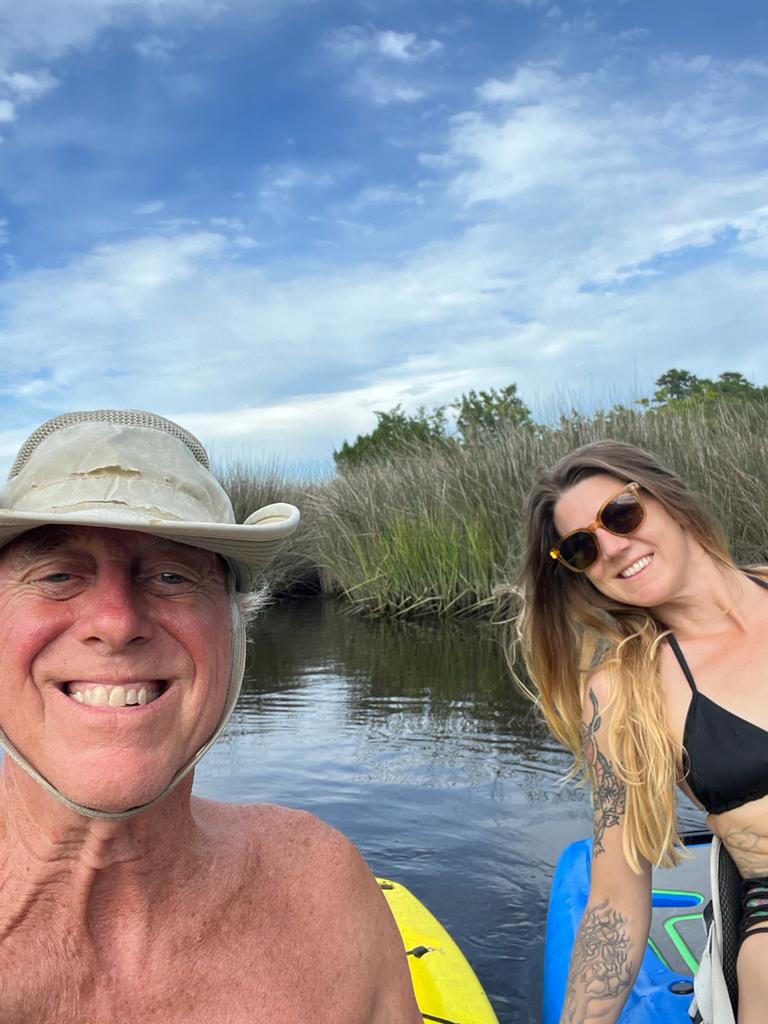
The tide was just starting to move out as I turned my small ocean kayak off the Stono River and up Green Creek. I’ve paddled this tidal creek a dozen times. The marshy banks are full of life and the turtles, dolphins, bonnet head sharks, fiddler crabs, and birds offer great entertainment. The bonnet head sharks were jumping up on shore after fiddler crabs. The little crabs are working the shoreline in the clusters of oysters looking for food and the sharks take advantage of the opportunity for an easy snack. One of the best things about kayaking these tidal creeks is how close you can get to nature.
I always try to time this particular trip to get out there at low tide. That way, the incoming tide helps me get up the creek. Coming back down the creek, the incoming tide is not that strong, so not bad to paddle against. I can always use the workout anyway. But I was prepared for a bit more workout this trip, as I paddled steadily against the ever-increasing rush of outgoing water assisted by gravity in the shallow creek. It’s not a big deal and I know if I just take my time and pace myself, it will be a great trip.
There are lots of small feeder creeks entering Green creek and these can be a lot of fun to explore. There’s a lot of little sand bars with oyster catchers waiting for their favorite food to be exposed by the receding tide. Or maybe catch a glimpse of a diamond back turtle snoozing at the edge of the creek and you get a good look at him before he wakes up and escapes to the water. You just need to make sure the feeder stream is wide enough to paddle in. Up in the narrow sections, maneuvering the boat can get really tricky with a little tidal current running and your paddle getting tangled in Spartina grass.
I turned off the main creek onto a branch that looked interesting. The stream was fairly wide and appeared to go up into the marsh a good ways in a serpentine course. Probably some birds up in there and I wanted to see how far in to the marsh it went. I saw two or three metal posts about 50 foot up the stream that marked the location of submerged oyster beds. Might be some red fish lurking in one of the many bends.
What happened next should not have caught me off guard. I am no expert paddler, I admit, but I have been handling kayaks, canoes, and small boats of all kinds most of my life. But I am a bit of a “sky larker” and was looking for marsh wrens and not noticing the increasing current building in this little tributary. Water always seeks its own level and the force of the current is determined by the amount of water that needs to move with the tide through the space provided by the creek bed. Simply put, the water is going to move a lot faster in the shallower parts of the creek. I noticed the current change when the boat started moving backward and becoming harder to steer. No big problem, I thought. Just dig in with the paddle some to push over the shallow spot.
I began making headway, but the current was increasing as I moved over ever shallower bottom. The surging current began to turn the nose of the little boat to port despite correcting efforts with the paddle. I put the foot-controlled keel fin hard to starboard and while this helped steerage somewhat, forward progress was slowed by putting more keel surface against the current. I was beginning to lose the battle. Thinking quickly, I applied a simple solution. Simply let the boat swing around with the current, paddle back out into the main creek, then start over while paying more attention this time. Just part of the fun, nothing to it, I thought.
My little plan didn’t quite work out. As I let the nose of the boat come around, pushed hard over by the current, at about 90 degrees into the turn the boat stopped dead. With the turn only half completed, I was now broadside to the current and water was coming over the boat. What the hell is going on here? Took me a second to figure it out. My kayak had struck one of the steel posts marking the oyster bed. I was now pinned between the post and the currant and about to capsize the boat, if I didn’t do something fast.
Now, I don’t mind getting wet. But if I go over here, it was too shallow to do an Eskimo roll to right the boat. And, if I bail out of the boat, I’m surrounded by deep pluff mud. In case you are not from here, pluff mud is the Lowcountry equivalent to quick sand. You will sink up to your crotch and lose at least one sandal. I would need to “swim” the boat a mile or two to hard ground, so I could just get back in the tipsy kayak.
I had about three seconds to think about all this. During which time, I was not solving the problem. And this made me mad. Very very mad! And becoming more pissed every second. I don’t think I was panicking. I was just truly and totally pissed off that I was in this situation and not getting out without a lot of trouble. I tried to shove away from the post. I dug hard with the paddle. All to no avail. The harder I tried, the more frustrated and angrier I got. I believe I was yelling out loud most of the sailor words my Dad had taught me. I was completely consumed by anger. That’s when it hit me. Who or what the fuck am I angry at? The tidal creek? The DNR guy that put this marker post here? God? Myself?
I inherited my anger from my Dad. My Dad was a great guy, but he inherited anger from his Dad and thought it was a natural thing to get totally pissed off at anything not going his way. As his first child, I seemed to do a lot of things that didn’t go his way. I got yelled at a lot. And it was not your basic raising of the voice mad at the dumb thing I might be doing, it was top of the lung screaming, red faced, clenched fist, in my face anger. So, I carried on that family tradition with bullying my little brothers, getting into fights at school, and road rage. I thought it was normal. I didn’t even realize I was doing it.
We all get angry sometimes, right? It’s a natural reaction to stuff we don’t like and is hard or impossible to fix, right? Anger is a healthy form of stress relief, right? Do I really think life should be problem free? Or, is anger a learned behavior? My Dad yelled at me a lot when I was a child. That was his way of solving problems. Any situation that didn’t go his way would trigger a stream of loud cussing. He was never violent. Mom would say, “He is just venting”. I know it didn’t make me feel very good when I was the target. I guess others felt the same when I made them the target.
I remember once when I was having a particularly bad tantrum. Don’t remember what it was about, but probably plumbing or painting that wasn’t going right. I always hated plumbing and painting anyway. As I was cooling down from the yelling fit somewhat, my wife casually mentioned, “You know that’s not normal, right?” I had no idea what she meant. Everyone yells and screams when things don’t go right, I know. At least that’s what I thought back then.
Back to the story
It’s truly amazing the amount of crap that can go through your head in a time of crisis. Crisis? It suddenly occurred to me, was this little hassle in the creek really a crisis? I sure am acting like it is. The realization my anger was having absolutely no positive affect on the situation washed over me like a shore break wave. My thinking suddenly cleared. The outcome was no longer a concern if I did my best and faced the consequences like just another adventure. I might get banged up a little, but pretty sure this won’t kill me.
That angry “self” was now gone. There was nothing there now except boat, water, gravity, and that damn oyster bed marker. I tucked the paddle under my arm, gripped the steel marker stake with both hands and gently balanced the force of the water between the marker and my butt in the boat. With a slight twist of my core, the boat was free and gracefully shot out into the main creek and deeper slower moving water. Wow, that was easy!
Back to real life
I felt ashamed for the way I acted for days after that kayak trip. I couldn’t stop thinking about it. I guess I’ve been acting like that all my life and not even realizing it. I was alone in that kayak with no one else to blame and yell at for that situation that, after all, was not “my fault”. Depression was starting to set in with all the negative “self-talk”. No problem, I am use to that. I’ll just need a couple extra beers tonight, maybe. But I really wasn’t ready for what was going to happen next.
So, just a routine drive into work the next morning. Man, the drivers here suck. A friend of mine says there are two kinds of drivers in South Carolina, the idiot in front of you and the ass hole behind you! Didn’t take long to confirm this as the car that just entered the interstate pulls directly over into the left lane going 10 mph below the speed limit, right in front of me. I let them have it with both barrels, screaming, blowing the horn, flashing my lights, and yelling loudly enough to be heard at 60 mph. I was justified since I was doing everything right and they were in the wrong. Then, I felt it happening again.
The same feeling I had in the kayak that day came back like I was watching some other angry fool yelling and screaming. Such massive negative energy. And for what? I was now seeing my angry thoughts and feelings clearly. That other driver was no longer the enemy. My thinking was completely reversed. They’re driving the best they can and none of this is intentional. This is absolutely no different than an oyster bar marker in the creek. Just part of the constant flow of challenges in life. A natural part of life. I had to pull over and think about this for a while.
Revelation
Took me way too many years to realize problems are a natural part of life. I know now, I can’t control that, but I can control how I react. Controlling how I react to problems has become a lifelong project. I am much better now and life has improved appreciably because of this change. People can change. Just as our parents modified our behavior to suit their social standards, we can continue the process on our own accord to become the best person that suits us and those around us. For way too long, I simply accepted myself as, “That’s just the way I am”. Very immature.
I was young and foolish then; now I am old and foolisher.- Mark Twain, a Biography
Conclusion – rest of the boat trip, the rest of life
The rest of that kayak trip went well. Partly because I was paying more attention but also because nature cooperated. I eventually did see a couple marsh wrens, some diamond back turtles, blue herons, tri-color herons, and white ibis. A pod of bottle nose dolphins were fishing about half way up the big part of the creek. Even saw a baby one with their mom. Took me about three hours to go as far as I could up Green creek, but coming back was only an hour with the tide assisting. All and all, a super day! And, came back with a lesson in life that changed me forever.
The problems in life are no different than the rocks and logs in the middle of the stream. How they are handled depends on boat paddling skills learned by training and experience. These obstacles are life itself! Figure out how to go around, over, or through and learn something new. But then, some of us are luckier than others. Quality of life greatly depends on luck. There is a big difference between a careless driver and brain cancer. I am very patient on the road these days, but cancer would probably still piss me off. But I would like to think I’ll get to a point some day where it would not.
And, one last note. You know you’re making progress on your anger management when you start laughing at your fuckups!
Go have yourself a great day,







 The Blog of Tim Schmitz
Leave a comment