You already know the value of having a mentor, so I won’t get into that. Your first mentor was probably your mother or father, as was mine. That caring person set you on the course you are on today. As I moved ahead in my career I had some great bosses and associates that really helped steer me right. But now, the older I get, the harder it is to find a mentor. As I’ve aged there are fewer older people I know that are on the road ahead of me and younger associates hesitate to advise me, even when they are a lot smarter than me. These smart young folks erroneously assume I already know it all. How silly is that!?
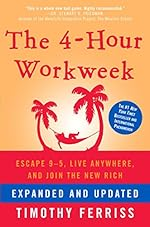
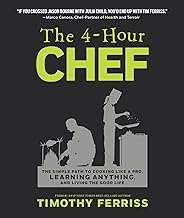
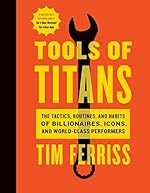
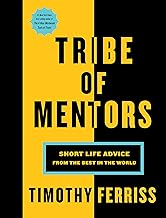
A few years ago, I stumbled upon some great mentors from an unlikely source, the Tim Ferriss books and podcasts. Back when I was learning to do real estate investing, I read Tim’s book “The Four-Hour Work Week”. As an engineer, the book resonated with me in presenting a systems-based process for setting up and operating a business efficiently. I liked Tim’s style, so I read his other great books:
Reading “Tools of Titans” and “Tribe of Mentors” opened my eyes to the lives of some of the most successful people in the world. Especially enlightening is the way Tim would deep dive into their daily personal routines –- things they did to control stress, stay healthy, and be productive –- while running some very successful projects. I got an awareness of how these high-profile folks were not much different than us “ordinary” folks. Their main difference is their skill set, but their daily life is not much different than anyone else.
I have continued to find more excellent mentors in Tim’s podcasts. I have listened to a lot of podcasts and Tim’s stands out due to his exceptional interviewing skills and the wide variety of folks he has on. No matter what field you’re pursuing, you are bound to find someone Tim has interviewed that is a leader in that field.
I’ve applied a lot of the gleaned advice in my own life. If you’re interested, you can find a lot of it here Simple Stuff That Changed my life.
Tim also writes a good blog. Go look for yourself: https://tim.blog/ and pull down the pod cast “The Tim Ferris Show” from your favorite podcast site. Learn more about Tim Ferris here: https://en.wikipedia.org/wiki/Tim_Ferriss. I encourage you to give Mr. Ferriss a try if you’re having trouble finding good folks to bounce your questions and ideas off of.
The blog serves as a personal journal, sharing insights from the author’s life experiences in finance, health, nature, exercise, history, science, and philosophy. It emphasizes the importance of mindset changes for financial management, maintaining health proactively, appreciating nature, regular exercise, learning from history, and understanding philosophical concepts for personal growth and improved living.
Stand by for some good posts coming up in the new year!
Welcome to my blog. I expect this will be more like a personal journal, but I also want to give some insights I’ve gleaned from my travel experiences and studies. Personally, I’ve taken way too many years to learn some simple things that make life and the world a lot better. I hope to share what I’ve learned to younger people (and maybe some of my fellow old farts) so they will not have to do as much catch up as I have.
I will focus on some basic areas that make the most improvements to a good life:
Financial – Struggling through life, pay check to pay check, is not a good plan. It does not have to be that way. Learning to manage your personal finances more like a business is a much better way. Our economy is designed to promote commercialism and this is the trap. Improving personal finances is as simple as controlling expenses and saving for the future. The main hurtle to this is the change in mindset that is required. For example, what are you thinking about the day before payday – “I’ll have the money to go out to eat”, “I can buy that new dress or sports coat I’ve wanted”, or “This paycheck will give me enough down payment for a new car loan”. Or are your thoughts more like – “I get to pay down that credit card a little more”, “I’ll have a little bit to add to retirement savings”, or “I’ll have a little bit to add to saving for a down payment on an investment property”. A change in your mindset is the way out of the commercialism trap.
Health – A lot of folks, my younger self included, think their doctor is all they need to stay healthy. Go through life until you feel bad, then go to the doctor and they fix you. That’s actually a downward spiral. Look around at the older folks you know. How many of them are sitting around watching TV with too many aches and pains to get out much any more? Truth is, our main stream doctors are only trained to “fix” people. They are not trained to keep you healthy, much less improve your health. I’ve finally learned there is a whole other type of doctor out there that is totally focused on improving health, strength, and endurance. They are the sports medicine doctors. I know, if you’re like me, you can’t afford your own personal sports doctor. But fortunately, these guys write books, have web sites, and podcasts. These guys share their knowledge for all of us to benefit from. I’ll be sharing the best of these I’ve found in future blogs.
Nature – Want to feel like you’re rich even if you’re broke? Go outside and learn the different trees and birds. Breath the air. Go for a snorkel and learn about the fish. Plant some new plants in your yard. Go for a walk in your local park. It’s all free or cheap and does wonders for the attitude.
Exercise – Strength training and cardio are not an option. Find some activities you enjoy doing to keep you going. Move it or lose it! It’s well known we lose muscle mass and blood flow as we age. Work those muscles and get the blood flowing to the brain. That, good sleep, and diet are the keys to better quality of life at any age. Don’t neglect flexibility and balance, as these are the first to go as you get older. “I’ve fallen and I can’t get up!” Don’t let that happen. Yoga does it for me, but there’s plenty of other ways.
History – The German philosopher George Wilhelm Friedrich Hegel famously said, “What experience and history teach is this—that people and governments never have learned anything from history, or acted on principles deduced from it.” Politicians depend on this fact, but we don’t have. Learning human history will demystify and filter the fire hose of news we get everyday.
If you want to be less frustrated by the silly actions of society and governments, start reading more history. I acquired an interest in history when I started traveling around the Caribbean. At first glance, the islands appeared to be “third world” to me. I saw a lot of old run down buildings and folks living below standards I am use to. Upon closer look I realized that was not the case at all. These islands are “old world”, their post Columbian societies being formed a couple hundred years before that of the states. That change in perspective sparked my curiosity about how civilization began and changed shape through time. I started studying the explorations of the European’s discover of the “New World”, but then backed up and got interested in man’s first emergence on the planet. You will find some great recommendations in my reading list that will explain a lot about what is going on in your world today.
Science – I am very interested in many facets of biology and physics. While not much of a scientist (my math skills being way out of date!), I just like to try to understand more about the world and the universe. I’m presently learning more about AI. Did you know that AI development has helped us learn more about how our own brains work? There is just so much to learn and so much more yet to be discovered.
Philosophy – Learning some basic philosophical theories is a good way to learn more about yourself, the folks in your life, and society. I lean towards stoicism for personal and business decisions and Zen Buddhism for life perspective.
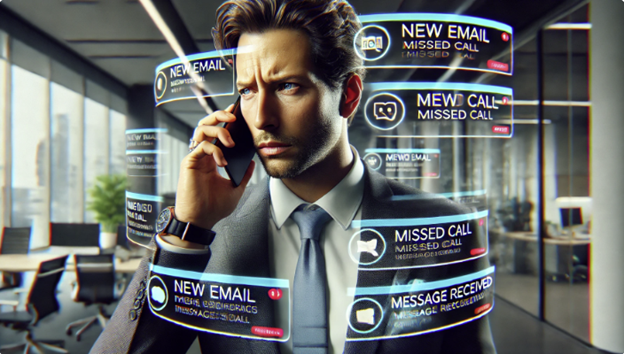
Put an end to communication frustration. Take a few simple steps to improve productivity and reduce churn.
Like to find some extra hours in your day? Effective communication is essential to success in all our business and personal projects. Most folks know this, but lots of us take it for granted since it is an integral part of each day. Like drinking plenty of water, we do it all day, so we don’t think much about it, but that’s essential to our health. A little time spent analyzing our communication habits to improve efficiency has the beneficial side effect of creating more time in our day and the day of others.
Are you overwhelmed by messages and calls? Our time is valuable and the communication methods you and your colleagues choose can conserve or waste time. We are in the age of multiple communication tools, each with many pros and cons. Using the tool that best fits the message can improve efficiency, save time, and reduce our level of stress.
I had a major awakening on this subject a few years ago. I was helping the Navy design wireless networks for ships. I was the lead engineer in our lab, so I had a lot of coordinating to do everyday with other engineers, equipment vendors, logistics folks, and our managers. On a typical day I would spend the first two, three, maybe four hours on the phone each morning. Then the Navy came down with a major operational change. We were all issued Navy.mil email addresses and ordered to use email for all communications possible. I had a tough time accepting this. Phone calls are so much more personal. Not only would the message be conveyed, but you also knew how their family was doing, the latest gossip, and when the next group happy hours is. Why switch to email when you can work the phones? But, once I finally caught on, my entire day changed. I was done with emails in the first hour of the day and had eliminated 90% of the calls I needed to make. This meant way more time in the lab where I was actually getting stuff done!
Then, text messaging came along. Way more efficient than email for short messages, but other than that it’s a shit show! I will break that down in a minute.
In a business context, selecting the right communication medium—email, phone, or text—depends on the urgency, formality, and complexity of the message. Here are guidelines to help decide:
Email
Email solves a lot of the problems caused by the other comm modes. The best use of email is for formal, important, and detailed communication that needs a response within 24-48 hours. Specifically:
When formality is required, like sending reports, proposals, contracts, meeting minutes, or client follow-ups.
When details need to be documented, like project updates, task assignments, or confirming decisions.
And when the response is not urgent. You only need to check email once a day. Use email to ask non-urgent questions or discussions that can wait 24 to 48 hours.
When emailing always use a professional tone and structure your message for clarity. Email is the equivalent to the old business letter and should be written in that style. Here’s some other good practices:
Use rich text formatting to take advantage of bold text, highlighting, bullets, etc. for better readability.
“Answer the mail!” Check email at least once a day to maintain consistency and responsiveness.
Manage your email account: use folders, separate accounts for business and personal, block spam, and have a “trash” email account for signing up to newsletters, etc.
Have good signature blocks. Most should include your phone number. If the recipient reads something in your email that strikes them as urgent, they don’t need to look up your phone number. It’s at the bottom of every email.
Get your life back by training your colleagues and customers to email. Once they see you are VERY responsive with email, they will get sucked in.
Make your emails as smart as you are – reread and edit all emails before sending! The person that can compose and type anything perfectly the first time is very rare. I know that’s not me and probably not you. If you’re not doing this already, once you start you will see what I mean, there will be mistakes. DON’T LET YOUR EMAILS MAKE YOU LOOK LIKE A DUMMY!
Phone
Phone calls are total time suckers, but nothing beats a call for certain things. A phone call is best for urgent or complex topics requiring discussion. Use phone calls when a quick decision or immediate response is needed for resolving time-sensitive issues, clarifying miscommunications, or confirming details for tight deadlines. Voice calls are essential when complexity or sensitivity is involved. Emails and texts do not express emotion like the tone of a voice. Calls are more personal for delivering critical feedback, negotiating contracts, or addressing client concerns.
When calling, always respect working hours and schedule non-urgent calls when possible. Remember phone calls are not self-documenting like email or texts. Having a clear agenda and keeping notes makes your calls more productive and considerate of everyone’s time.
Most importantly, before you make that call ask yourself, “Can this be better done by email?” You can read and write a lot of emails in the time it takes to make a single call. Be considerate of the recipient’s time, and yours!
Texting
Text messaging is best for brief, time sensitive updates when quick and informal communication is appropriate. Use texting to inform someone or a group of a last-minute schedule change or confirming logistics (e.g., “Meeting moved to 3 PM”). Texting is much more time efficient than a call for short semi-urgent conversations.
Beware, texting is easy for the sender, but much harder to manage for the receiver. I’ve noticed a lot of folks using text just because it’s so easy to click, speak or type, and send. But on the other end, text messages are a kludge of random bits of information not categorized in any way and hard to search. Non-urgent messages coming in from several people in random order is a big time-sucker. If you want to have a discussion, make a call. If you want to document information in an organized manner, use email, please!
I am certain there are issues I have not covered here and some of you will disagree with my protocols. So, I would love to get your comments. And don’t forget, reread and edit all messages before sending!







 The Blog of Tim Schmitz
Leave a comment