Exploring the natural world and living the best life
Author: Tim Schmitz
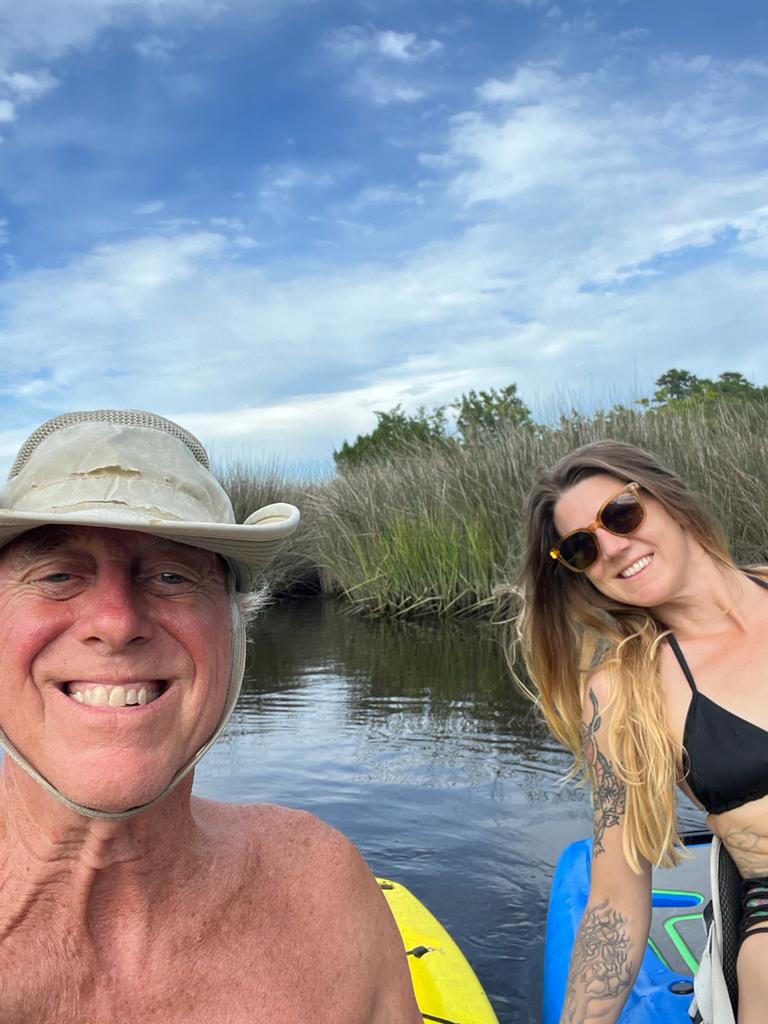
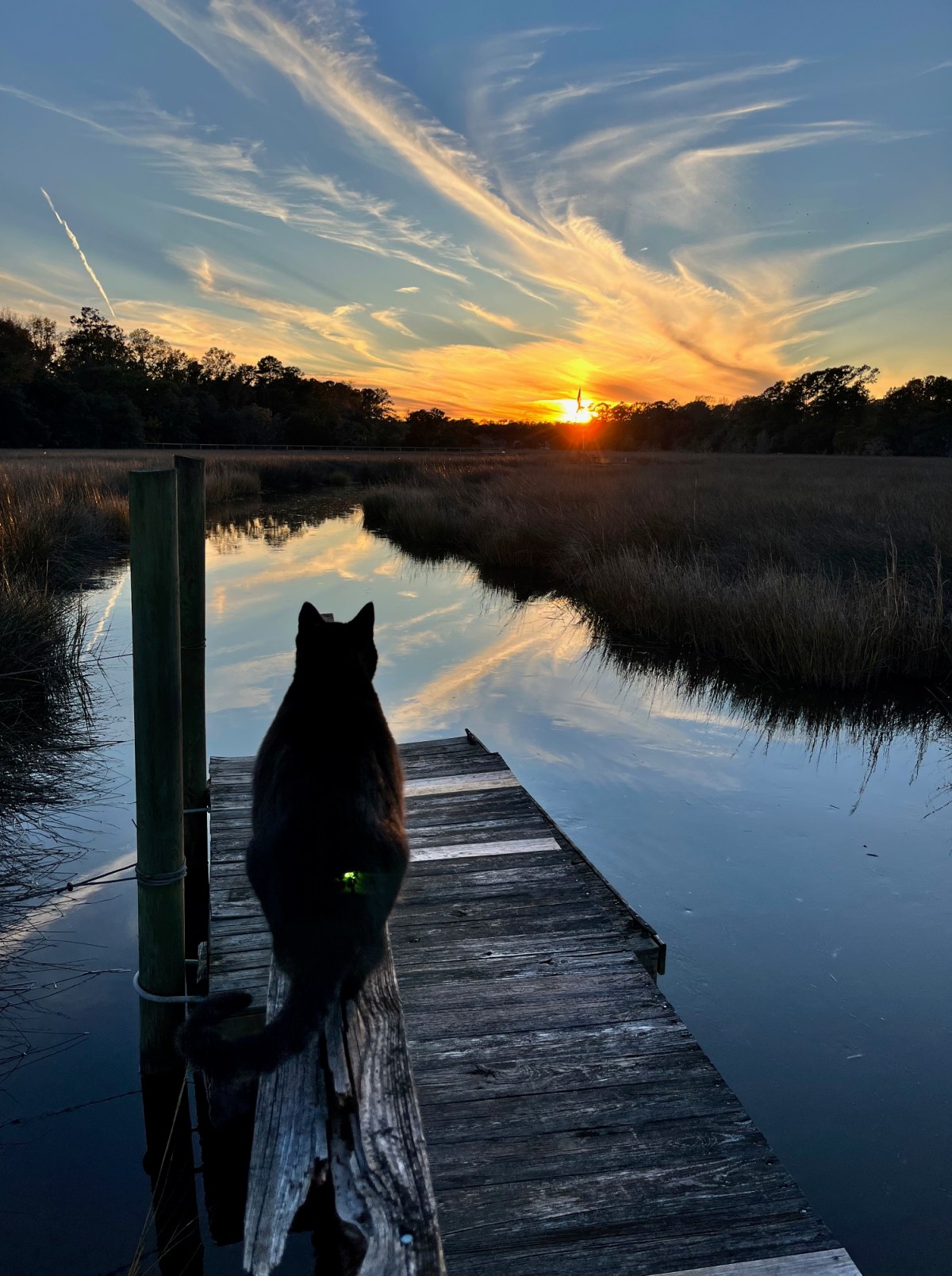
I am a retired network engineer and scuba instructor presently self-unemployed as a real estate investor. I love to scuba dive, hike, bird watch, kayak, and drink beer. Sometimes all at once. I am a fairly avid reader and enjoy talking and writing about stuff I've learned and experienced. I live in Charleston, SC with my cat Jack London.
The pursuit of truth requires effort and study, as easy answers often mislead us. Understanding complex issues necessitates thorough exploration rather than superficial conclusions. Developing a reliable filter for misinformation, whether from ads or news, is crucial. By staying informed, we can make better decisions and navigate life’s complexities more effectively.
This is one of the simplest of philosophic truths but seems it’s easy to forget.
Getting to the truth requires study. I was joking with my surgeon before a hand operation, “After you fix my hand, will I be able to play guitar like Carlos Santana?” He replied, “Yes! If you practice like Carlos Santana.” You must work for the truth. The doctor knew that. And anyway, he’s heard all the jokes.
I’ve noticed a lot people seem to seek an easy answer to life’s important questions. Why are we here? -> God . Why are we subjugated? -> conspiracy by the elites. Why is life so hard? -> blame others. Why can’t I play guitar like Carlos Santana? -> he has a “gift”, and I don’t.
I learned way too late in life, there are no simple answers to complex questions. Or simple questions for that matter. You must read the whole book, or a lot of books, to begin to get close to some of the answers. Isn’t a little study worth the effort to lift the veil of ignorance even a little? Don’t forget the veil of ignorance is invisible to the ignorant.
That reminds me of another old joke. In every family there’s that one guy that’s a little “off” and if you don’t know who it is in your family, it’s you! We don’t know what we don’t know. Have I missed any of the old clichés? While constantly reminding myself of how easy it is to jump to conclusions, I still do it without thinking about half the time. This little trap is embedded in almost every advertisement and used constantly by politicians, because they know it works!
What has really worked for me is learning as much as possible about the aspects of life that affect me. This must be done ahead of time, before confronting constant decisions popping up in everyday life. This way you’re prepared to make a better choice instead of going for what seems obvious at the time.
Here’s a good example based on a real-life health supplements company advertising on TV and everywhere else right now. I am not going to mention their name in public because fakers like to sue. Their premise is we need fruit and vegetables in our diets. This is totally true. They claim to have put all the fruits and vegetables we need in their pills. What a great product, right? After hearing and seeing their ads about 100 times I went on their web site to check it out. Lots more ads on there. So, what is really in this stuff? Legitimate companies always have a guaranteed analysis report done by a certified third-party lab, so I’ll just go look for that. It was easy to find the supplement contents by scrolling down on their landing page. Surprise! All they have is pictures of fruits and vegetables. I found no analysis report . On that contents page they have a picture of an apple. Could be just stems and seeds, right? When you boil down all the ad hype to the few specifics, they may truthfully be making this stuff from the sweepings off the floor of some produce packing plant.
I think a good idea is to keep our BS detector in fine tune. Practice by listening to ads, political speeches, news articles, etc. and focus on the specifics and filtering out all the puffery and rhetoric. Pay close attention to what is not said. Applying the old news reporters rule of always getting to the “who, what, when, and where” of the issue or subject can punch through the vale of BS.
The fact is ads, false claims, and fake news is in our face everyday and just getting worse as our communication platforms improve. Having a good BS filter will ease the stress and help us sort out what is right for us in life. So, keep that BS filter tuned up!
Navigating Life’s Currents: A Kayaker’s Reflection on Anger.
I reflect on a kayaking trip that transformed into a moment of self-discovery and growth. Initially frustrated by an unexpected insidence causing a massive fit of anger, I realize my reactions stem from learned behavior. The experience helped to teach me to face challenges calmly, improving my approach to life’s obstacles and enhancing overall quality of life.
Is it “normal” to get pissed off when things go wrong?
The tide was just starting to move out as I turned my small ocean kayak off the Stono River and up Green Creek. I’ve paddled this tidal creek a dozen times. The marshy banks are full of life and the turtles, dolphins, bonnet head sharks, fiddler crabs, and birds offer great entertainment. The bonnet head sharks were jumping up on shore after fiddler crabs. The little crabs are working the shoreline in the clusters of oysters looking for food and the sharks take advantage of the opportunity for an easy snack. One of the best things about kayaking these tidal creeks is how close you can get to nature.
I always try to time this particular trip to get out there at low tide. That way, the incoming tide helps me get up the creek. Coming back down the creek, the incoming tide is not that strong, so not bad to paddle against. I can always use the workout anyway. But I was prepared for a bit more workout this trip, as I paddled steadily against the ever-increasing rush of outgoing water assisted by gravity in the shallow creek. It’s not a big deal and I know if I just take my time and pace myself, it will be a great trip.
There are lots of small feeder creeks entering Green creek and these can be a lot of fun to explore. There’s a lot of little sand bars with oyster catchers waiting for their favorite food to be exposed by the receding tide. Or maybe catch a glimpse of a diamond back turtle snoozing at the edge of the creek and you get a good look at him before he wakes up and escapes to the water. You just need to make sure the feeder stream is wide enough to paddle in. Up in the narrow sections, maneuvering the boat can get really tricky with a little tidal current running and your paddle getting tangled in Spartina grass.
I turned off the main creek onto a branch that looked interesting. The stream was fairly wide and appeared to go up into the marsh a good ways in a serpentine course. Probably some birds up in there and I wanted to see how far in to the marsh it went. I saw two or three metal posts about 50 foot up the stream that marked the location of submerged oyster beds. Might be some red fish lurking in one of the many bends.
What happened next should not have caught me off guard. I am no expert paddler, I admit, but I have been handling kayaks, canoes, and small boats of all kinds most of my life. But I am a bit of a “sky larker” and was looking for marsh wrens and not noticing the increasing current building in this little tributary. Water always seeks its own level and the force of the current is determined by the amount of water that needs to move with the tide through the space provided by the creek bed. Simply put, the water is going to move a lot faster in the shallower parts of the creek. I noticed the current change when the boat started moving backward and becoming harder to steer. No big problem, I thought. Just dig in with the paddle some to push over the shallow spot.
I began making headway, but the current was increasing as I moved over ever shallower bottom. The surging current began to turn the nose of the little boat to port despite correcting efforts with the paddle. I put the foot-controlled keel fin hard to starboard and while this helped steerage somewhat, forward progress was slowed by putting more keel surface against the current. I was beginning to lose the battle. Thinking quickly, I applied a simple solution. Simply let the boat swing around with the current, paddle back out into the main creek, then start over while paying more attention this time. Just part of the fun, nothing to it, I thought.
My little plan didn’t quite work out. As I let the nose of the boat come around, pushed hard over by the current, at about 90 degrees into the turn the boat stopped dead. With the turn only half completed, I was now broadside to the current and water was coming over the boat. What the hell is going on here? Took me a second to figure it out. My kayak had struck one of the steel posts marking the oyster bed. I was now pinned between the post and the currant and about to capsize the boat, if I didn’t do something fast.
Now, I don’t mind getting wet. But if I go over here, it was too shallow to do an Eskimo roll to right the boat. And, if I bail out of the boat, I’m surrounded by deep pluff mud. In case you are not from here, pluff mud is the Lowcountry equivalent to quick sand. You will sink up to your crotch and lose at least one sandal. I would need to “swim” the boat a mile or two to hard ground, so I could just get back in the tipsy kayak.
I had about three seconds to think about all this. During which time, I was not solving the problem. And this made me mad. Very very mad! And becoming more pissed every second. I don’t think I was panicking. I was just truly and totally pissed off that I was in this situation and not getting out without a lot of trouble. I tried to shove away from the post. I dug hard with the paddle. All to no avail. The harder I tried, the more frustrated and angrier I got. I believe I was yelling out loud most of the sailor words my Dad had taught me. I was completely consumed by anger. That’s when it hit me. Who or what the fuck am I angry at? The tidal creek? The DNR guy that put this marker post here? God? Myself?
I inherited my anger from my Dad. My Dad was a great guy, but he inherited anger from his Dad and thought it was a natural thing to get totally pissed off at anything not going his way. As his first child, I seemed to do a lot of things that didn’t go his way. I got yelled at a lot. And it was not your basic raising of the voice mad at the dumb thing I might be doing, it was top of the lung screaming, red faced, clenched fist, in my face anger. So, I carried on that family tradition with bullying my little brothers, getting into fights at school, and road rage. I thought it was normal. I didn’t even realize I was doing it.
We all get angry sometimes, right? It’s a natural reaction to stuff we don’t like and is hard or impossible to fix, right? Anger is a healthy form of stress relief, right? Do I really think life should be problem free? Or, is anger a learned behavior? My Dad yelled at me a lot when I was a child. That was his way of solving problems. Any situation that didn’t go his way would trigger a stream of loud cussing. He was never violent. Mom would say, “He is just venting”. I know it didn’t make me feel very good when I was the target. I guess others felt the same when I made them the target.
I remember once when I was having a particularly bad tantrum. Don’t remember what it was about, but probably plumbing or painting that wasn’t going right. I always hated plumbing and painting anyway. As I was cooling down from the yelling fit somewhat, my wife casually mentioned, “You know that’s not normal, right?” I had no idea what she meant. Everyone yells and screams when things don’t go right, I know. At least that’s what I thought back then.
Back to the story
It’s truly amazing the amount of crap that can go through your head in a time of crisis. Crisis? It suddenly occurred to me, was this little hassle in the creek really a crisis? I sure am acting like it is. The realization my anger was having absolutely no positive affect on the situation washed over me like a shore break wave. My thinking suddenly cleared. The outcome was no longer a concern if I did my best and faced the consequences like just another adventure. I might get banged up a little, but pretty sure this won’t kill me.
That angry “self” was now gone. There was nothing there now except boat, water, gravity, and that damn oyster bed marker. I tucked the paddle under my arm, gripped the steel marker stake with both hands and gently balanced the force of the water between the marker and my butt in the boat. With a slight twist of my core, the boat was free and gracefully shot out into the main creek and deeper slower moving water. Wow, that was easy!
Back to real life
I felt ashamed for the way I acted for days after that kayak trip. I couldn’t stop thinking about it. I guess I’ve been acting like that all my life and not even realizing it. I was alone in that kayak with no one else to blame and yell at for that situation that, after all, was not “my fault”. Depression was starting to set in with all the negative “self-talk”. No problem, I am use to that. I’ll just need a couple extra beers tonight, maybe. But I really wasn’t ready for what was going to happen next.
So, just a routine drive into work the next morning. Man, the drivers here suck. A friend of mine says there are two kinds of drivers in South Carolina, the idiot in front of you and the ass hole behind you! Didn’t take long to confirm this as the car that just entered the interstate pulls directly over into the left lane going 10 mph below the speed limit, right in front of me. I let them have it with both barrels, screaming, blowing the horn, flashing my lights, and yelling loudly enough to be heard at 60 mph. I was justified since I was doing everything right and they were in the wrong. Then, I felt it happening again.
The same feeling I had in the kayak that day came back like I was watching some other angry fool yelling and screaming. Such massive negative energy. And for what? I was now seeing my angry thoughts and feelings clearly. That other driver was no longer the enemy. My thinking was completely reversed. They’re driving the best they can and none of this is intentional. This is absolutely no different than an oyster bar marker in the creek. Just part of the constant flow of challenges in life. A natural part of life. I had to pull over and think about this for a while.
Revelation
Took me way too many years to realize problems are a natural part of life. I know now, I can’t control that, but I can control how I react. Controlling how I react to problems has become a lifelong project. I am much better now and life has improved appreciably because of this change. People can change. Just as our parents modified our behavior to suit their social standards, we can continue the process on our own accord to become the best person that suits us and those around us. For way too long, I simply accepted myself as, “That’s just the way I am”. Very immature.
I was young and foolish then; now I am old and foolisher.- Mark Twain, a Biography
Conclusion – rest of the boat trip, the rest of life
The rest of that kayak trip went well. Partly because I was paying more attention but also because nature cooperated. I eventually did see a couple marsh wrens, some diamond back turtles, blue herons, tri-color herons, and white ibis. A pod of bottle nose dolphins were fishing about half way up the big part of the creek. Even saw a baby one with their mom. Took me about three hours to go as far as I could up Green creek, but coming back was only an hour with the tide assisting. All and all, a super day! And, came back with a lesson in life that changed me forever.
The problems in life are no different than the rocks and logs in the middle of the stream. How they are handled depends on boat paddling skills learned by training and experience. These obstacles are life itself! Figure out how to go around, over, or through and learn something new. But then, some of us are luckier than others. Quality of life greatly depends on luck. There is a big difference between a careless driver and brain cancer. I am very patient on the road these days, but cancer would probably still piss me off. But I would like to think I’ll get to a point some day where it would not.
And, one last note. You know you’re making progress on your anger management when you start laughing at your fuckups!
The author shares personal experiences of battling nausea on various boats, particularly submarines. He offers insights on how to mitigate seasickness symptoms and draws parallels between it and other health issues like depression and fatigue. The key takeaway emphasizes taking control of one’s mental state for improvement. Attitude as medicine!
I am an expert on sea sickness.
Been getting seasick all my life. The first time, I was 3 years old on a ship coming back from Panama with the family. I still have vivid memories of the puke flowing back and forth on the deck in our state room as the ship rolled in the rough seas. I’ve been sick on every boat I’ve ever owned, except my kayaks. I think that’s why I like the kayaks so much. Maybe it’s because the kayak is closer to being in the water or maybe because I just can’t (or don’t) go in rough enough seas to get sick.
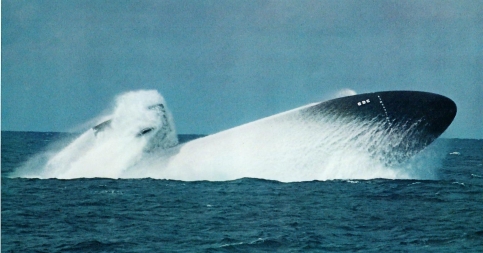
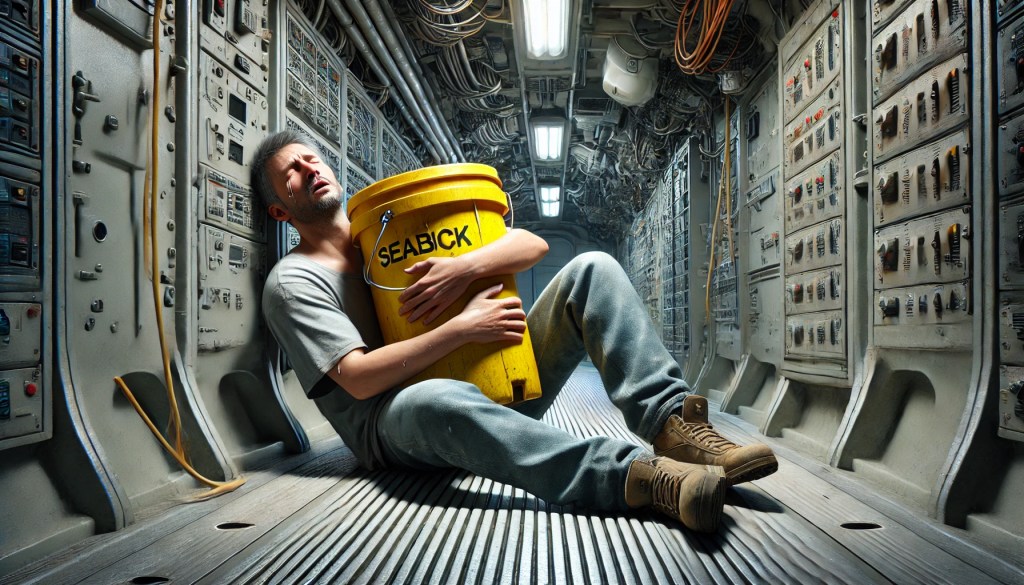
The sickest I’ve ever been was on a submarine. I worked in the shipyard and had to ride sea trials. We had just completed a test called “emergency blow”. While the sub is cruising at a depth of 1000 feet, all the ballast tank valves are opened at once, releasing air into the outer hull of the sub. The purpose of this maneuver is to surface the sub as fast as possible in an emergency. Riding the sub up during emergency blow is quite fun. You have to hang on to something and you really rock and roll when it hits the surface. But the fun stops when you get to the surface. Now the sub has used all the air in the ballast tanks, so diving again with them empty would be very unsafe. Safety protocols call for all air banks in the ballast tanks to be full before the sub is allowed to dive again. The air banks are recharged by several large air compressors that must draw air from a snorkel on the sail of the sub. (The “sail” is the structure that sticks up above the top deck of the sub. On older subs, it was called the conning tower.) The air bank recharging process takes 12 hours! Upon surfacing at completion of one particular emergency blow, we were met with 20-foot seas with a 15 second period 200 miles east of Cape Hatteras. The modern nuclear submarine is not designed to run on the surface, having a round hull like a big pipe. They roll side-to-side, as well as pitching up and down with the swells. While riding on the surface in such a sea state, the bow goes up 20 feet, then down 20 every 30 seconds, while rolling side to side to a 20-degree angle. Lots of yaw along with all that pitch all at the same time! I wedged myself prone on the deck in the Forward Sonar Equipment Space hugging a mop bucket for 12 hours.
From these many queasy years of experience on the ocean, I have learned what to do to avoid getting sick: dose up, stay topside in the fresh air, look at the horizon, eat light, etc. And, if all else fails, lay down to shut off the balancing mechanism in the inner ear. I also made a promise to myself to never ride another submarine on sea trails (five was enough!).
Seasick dive students.
When I became a scuba instructor, I found myself dealing with a lot of seasick students. No matter how much I warn them in class, they don’t believe they will get sick and don’t take precautions. “I’ve never been seasick in by life”, how many times have I heard that! They’ve just never been on a bouncy little dive boat at anchor in four-foot seas. Everybody has their amplitude and frequency of ocean swells that will make them sick. You can go out on boats and ships for years and just not hit your waveform. Seems those small bouncy dive boats hit a lot of people’s waveform.
It’s easy to tell when someone is starting to get sick. They get quiet, sit with their head down, eyes closed or looking at the deck, and turning white. Next will come the first purge, if preventive action is not taken. I try to tell them I understand how they feel from personal experience and, if they do what I say, it will help a lot. “Stand up, walk around and take some deep breaths of fresh air (stay out of the engines’ diesel fumes!).” “Look at the horizon!” And lastly, “Go to the back of the boat, if you are going to throw up!” But they don’t listen. They are incapable of listening. I’ve come to believe; this is a subdued version of the “flight or fight” reaction. The sea sickness won’t let them do what’s best to help them! The sickness is telling them to do all the stuff that will make it worse!
The disease tells you to do the wrong things.
The next series of events include holding a bucket under their face or physically moving them to the stern during uncontrolled projectile vomiting. I signal to the dive master to start cleaning the puke off everyone’s dive gear and the decks and quit making stupid jokes! I try to get the victim to drink some water and go for a swim off the back of the boat. This is also hard to get them to do, even though it really helps. Then they don’t want to go on the dive, even though that will really help. So much lost money, training time, and quitters caused by this terrible disease.
All this is preventable as I’ve proved to myself over many years. But it is hard to correct once the disease is in control. I got to wondering, might what I’ve learned about seasickness apply to other sicknesses?
Do other diseases do the same thing? fatigue? depression? alcoholism?
Depression does the same thing to us. I know depression and it’s not fun. It makes you want to hide away from people, lay around, watch TV, eat, and drink. The negative self-talk that runs through the brain seems unstoppable. Yet any first-year medical student can tell you what to do: exercise, read, get some good sleep, and just go get busy with something. Hard to do, though, when you just don’t feel like doin’ nothing!
Same with drinking. The only real cure for a hangover is more drinking!
Fatigue from work stress, family stress, or old age is common. Fatigue is self consuming like seasickness and depression and just tells you to do nothing which leads to more fatigue. Be aware of the fatigue and don’t listen to it. But start slow with a short walk or anything that gets you out of bed or off the couch. Don’t push it, but do something, anything but laying there and letting it consume you.
I don’t know why we are wired this way.
But I have learned how to fix it. Get in charge of the brain. You are the boss, not that bad puppy of a brain. Your brain pumps shit! And the worse you feel, the more shit the brain pumps. Learn that and you’re halfway there. Stop listening to the random crap spewing from that shit pump. Call yourself to attention and start giving some orders that make since and make you healthier and happier!
Disclaimer
I am far from being a doctor of medicine or psychology. I’m just an old guy that tried to learn from others but mostly learned from lots of mistakes. A smart person learns from their mistakes, but a wise person learns from other’s mistakes. I hope you are a little wiser after reading this. This is all much easier said than done, I know.
The blog serves as a personal journal, sharing insights from the author’s life experiences in finance, health, nature, exercise, history, science, and philosophy. It emphasizes the importance of mindset changes for financial management, maintaining health proactively, appreciating nature, regular exercise, learning from history, and understanding philosophical concepts for personal growth and improved living.
Stand by for some good posts coming up in the new year!
Welcome to my blog. I expect this will be more like a personal journal, but I also want to give some insights I’ve gleaned from my travel experiences and studies. Personally, I’ve taken way too many years to learn some simple things that make life and the world a lot better. I hope to share what I’ve learned to younger people (and maybe some of my fellow old farts) so they will not have to do as much catch up as I have.
I will focus on some basic areas that make the most improvements to a good life:
Financial – Struggling through life, pay check to pay check, is not a good plan. It does not have to be that way. Learning to manage your personal finances more like a business is a much better way. Our economy is designed to promote commercialism and this is the trap. Improving personal finances is as simple as controlling expenses and saving for the future. The main hurtle to this is the change in mindset that is required. For example, what are you thinking about the day before payday – “I’ll have the money to go out to eat”, “I can buy that new dress or sports coat I’ve wanted”, or “This paycheck will give me enough down payment for a new car loan”. Or are your thoughts more like – “I get to pay down that credit card a little more”, “I’ll have a little bit to add to retirement savings”, or “I’ll have a little bit to add to saving for a down payment on an investment property”. A change in your mindset is the way out of the commercialism trap.
Health – A lot of folks, my younger self included, think their doctor is all they need to stay healthy. Go through life until you feel bad, then go to the doctor and they fix you. That’s actually a downward spiral. Look around at the older folks you know. How many of them are sitting around watching TV with too many aches and pains to get out much any more? Truth is, our main stream doctors are only trained to “fix” people. They are not trained to keep you healthy, much less improve your health. I’ve finally learned there is a whole other type of doctor out there that is totally focused on improving health, strength, and endurance. They are the sports medicine doctors. I know, if you’re like me, you can’t afford your own personal sports doctor. But fortunately, these guys write books, have web sites, and podcasts. These guys share their knowledge for all of us to benefit from. I’ll be sharing the best of these I’ve found in future blogs.
Nature – Want to feel like you’re rich even if you’re broke? Go outside and learn the different trees and birds. Breath the air. Go for a snorkel and learn about the fish. Plant some new plants in your yard. Go for a walk in your local park. It’s all free or cheap and does wonders for the attitude.
Exercise – Strength training and cardio are not an option. Find some activities you enjoy doing to keep you going. Move it or lose it! It’s well known we lose muscle mass and blood flow as we age. Work those muscles and get the blood flowing to the brain. That, good sleep, and diet are the keys to better quality of life at any age. Don’t neglect flexibility and balance, as these are the first to go as you get older. “I’ve fallen and I can’t get up!” Don’t let that happen. Yoga does it for me, but there’s plenty of other ways.
History – The German philosopher George Wilhelm Friedrich Hegel famously said, “What experience and history teach is this—that people and governments never have learned anything from history, or acted on principles deduced from it.” Politicians depend on this fact, but we don’t have. Learning human history will demystify and filter the fire hose of news we get everyday.
If you want to be less frustrated by the silly actions of society and governments, start reading more history. I acquired an interest in history when I started traveling around the Caribbean. At first glance, the islands appeared to be “third world” to me. I saw a lot of old run down buildings and folks living below standards I am use to. Upon closer look I realized that was not the case at all. These islands are “old world”, their post Columbian societies being formed a couple hundred years before that of the states. That change in perspective sparked my curiosity about how civilization began and changed shape through time. I started studying the explorations of the European’s discover of the “New World”, but then backed up and got interested in man’s first emergence on the planet. You will find some great recommendations in my reading list that will explain a lot about what is going on in your world today.
Science – I am very interested in many facets of biology and physics. While not much of a scientist (my math skills being way out of date!), I just like to try to understand more about the world and the universe. I’m presently learning more about AI. Did you know that AI development has helped us learn more about how our own brains work? There is just so much to learn and so much more yet to be discovered.
Philosophy – Learning some basic philosophical theories is a good way to learn more about yourself, the folks in your life, and society. I lean towards stoicism for personal and business decisions and Zen Buddhism for life perspective.
Sleep is the foundation of health. Without it, nothing else works. Here’s a technique I’ve used for years when I have trouble getting to sleep.
Lots of folks have trouble sleeping and I am no exception. I have some physical things going on that make sleep tough, not to mention age. Back when I was working full time with a fairly stressful job, I had problems then, too. I have had my share of sleep deprivation moments. No fun waking up and realizing you’re driving. Or being in a meeting and suddenly everyone is looking at you and you’re not even sure where you are. Yes, I’ve had to work at this sleep thing for a few years. But I’ve gotten much better at it.
There’s massive information out there about good sleep habits and you need to do all that stuff. You know – dark room, quiet, regular sleep times, exercise, light dinner, limited alcohol. You’ve heard it all and you’re probably doing it. Me, too. Meantime, the brain just doesn’t want to turn off sometimes. The bad puppy that’s your brain decides the best thing to do is to review every bad decision you’ve ever made or needs to plan in detail everything you need to do the next day. The body is yelling, “Please let me rest!” and the brain is saying, “Nah, we got things we need to think about”. I’ve figured out a way to fix this and that’s what this post is all about. Good sleep is the foundation of health and the rewards penetrate all aspects of life.
I have used this technique for several years now with very good results. It’s basically all about taking control of your brain to lead it in the direction of sleep. The technique is simple, but can still be difficult to implement, so some patience is needed. I will describe how it’s done, then get into some of the science for those interested.
So, you’re laying in bed and the brain just will not turn off. Here’s what you do:
Start by working to relax your muscles one at a time. This is a yoga technique. When you think stressful thoughts, your muscles tighten. But this works both ways. If you relax the muscles, stress is reduced. Start with your face. Brow muscles tightened? Relax them. Muscles around the eyes, the jaws, back of the neck, relax them one at a time. Work your way down through your whole body. Check the belly, it can hold a lot of stress. This takes practice but pays big dividends. Take your time.
Then, start to focus your attention on your visual thoughts. That is, watching the visual imagery that happens with your eyes closed. Might be just some vague swirling dim colors, but that’s okay.
This procedure is not like a “light switch”. You will have to start over multiple times as your mind just naturally wants to revert back to just pumping out stressful thoughts. But that’s okay, it’s natural. Don’t stress out when it happens. Go looking for those face muscles that have tightened up again then refocus on the visual.
This probably won’t be easy to do at first, but I promise it gets easier with practice. After a while, you’ll manage to start the muscle relaxing and the visual focus at the same time. Look at it this way, when laying there unable to sleep, what else do you have to do? Just keep at it.
Now for the science. The first part of the process is simply taking conscious control of the stress expressed through the tightening of muscles. You can not control the unconscious control of your muscles due to stress, but you can control the relaxation of those muscles. Fortunately, the process works both ways – stress tightens the muscles but consciously untightening the muscles reduces stress. This alone can make you sleepier.
The science behind the second step is way more interesting. Focusing on visual thoughts or imagery can help calm an overactive mind and ease the transition into sleep. This phenomenon ties into several psychological and neurological principles:
Guided Imagery and Visualization
Research on guided imagery, where individuals focus on mental images, shows that it can reduce stress and promote relaxation, which are key for falling asleep. By engaging in visual thoughts, you’re essentially practicing a form of guided imagery that distracts your mind from stressful or intrusive thoughts, helping your brain wind down.
Shifting Brain Activity
When you focus on visual imagery, you activate areas of the brain linked to imagination and visual processing in the occipital lobe, rather than areas involved in verbal reasoning or problem-solving in the prefrontal cortex. This shift can reduce the cognitive load that keeps your mind active and alert, creating a mental state more conducive to sleep.
Hypnagogic State
The hypnagogic state is the transitional phase between wakefulness and sleep. During this state, people often experience vivid mental imagery and dream-like thoughts. By focusing on your visual thoughts, you will guide your brain into this state, where consciousness naturally starts to fade, and sleep begins.
Relaxation and Parasympathetic Activation
Visualizing calming or neutral images can stimulate the parasympathetic nervous system (responsible for rest and relaxation) while dampening the sympathetic nervous system (responsible for fight-or-flight responses). This relaxation response can lower heart rate and reduce anxiety, which are essential for sleep.
Reducing Default Mode Network Activity
The Default Mode Network (DMN) in the brain is active during wakeful rest and mind-wandering. Over activity of the DMN is linked to rumination and an inability to fall asleep. By focusing on visual thoughts, you’re giving your brain a specific task, reducing DMN activity, and helping your mind transition into sleep.
This is a great technique, but it does not always work. According to a leading sleep scientist (check my reading list), if you can’t fall asleep for 20 minutes, get up and do something low stress. I always have a good book to read on standby.
Put an end to communication frustration. Take a few simple steps to improve productivity and reduce churn.
Like to find some extra hours in your day? Effective communication is essential to success in all our business and personal projects. Most folks know this, but lots of us take it for granted since it is an integral part of each day. Like drinking plenty of water, we do it all day, so we don’t think much about it, but that’s essential to our health. A little time spent analyzing our communication habits to improve efficiency has the beneficial side effect of creating more time in our day and the day of others.
Are you overwhelmed by messages and calls? Our time is valuable and the communication methods you and your colleagues choose can conserve or waste time. We are in the age of multiple communication tools, each with many pros and cons. Using the tool that best fits the message can improve efficiency, save time, and reduce our level of stress.
I had a major awakening on this subject a few years ago. I was helping the Navy design wireless networks for ships. I was the lead engineer in our lab, so I had a lot of coordinating to do everyday with other engineers, equipment vendors, logistics folks, and our managers. On a typical day I would spend the first two, three, maybe four hours on the phone each morning. Then the Navy came down with a major operational change. We were all issued Navy.mil email addresses and ordered to use email for all communications possible. I had a tough time accepting this. Phone calls are so much more personal. Not only would the message be conveyed, but you also knew how their family was doing, the latest gossip, and when the next group happy hours is. Why switch to email when you can work the phones? But, once I finally caught on, my entire day changed. I was done with emails in the first hour of the day and had eliminated 90% of the calls I needed to make. This meant way more time in the lab where I was actually getting stuff done!
Then, text messaging came along. Way more efficient than email for short messages, but other than that it’s a shit show! I will break that down in a minute.
In a business context, selecting the right communication medium—email, phone, or text—depends on the urgency, formality, and complexity of the message. Here are guidelines to help decide:
Email
Email solves a lot of the problems caused by the other comm modes. The best use of email is for formal, important, and detailed communication that needs a response within 24-48 hours. Specifically:
When formality is required, like sending reports, proposals, contracts, meeting minutes, or client follow-ups.
When details need to be documented, like project updates, task assignments, or confirming decisions.
And when the response is not urgent. You only need to check email once a day. Use email to ask non-urgent questions or discussions that can wait 24 to 48 hours.
When emailing always use a professional tone and structure your message for clarity. Email is the equivalent to the old business letter and should be written in that style. Here’s some other good practices:
Use rich text formatting to take advantage of bold text, highlighting, bullets, etc. for better readability.
“Answer the mail!” Check email at least once a day to maintain consistency and responsiveness.
Manage your email account: use folders, separate accounts for business and personal, block spam, and have a “trash” email account for signing up to newsletters, etc.
Have good signature blocks. Most should include your phone number. If the recipient reads something in your email that strikes them as urgent, they don’t need to look up your phone number. It’s at the bottom of every email.
Get your life back by training your colleagues and customers to email. Once they see you are VERY responsive with email, they will get sucked in.
Make your emails as smart as you are – reread and edit all emails before sending! The person that can compose and type anything perfectly the first time is very rare. I know that’s not me and probably not you. If you’re not doing this already, once you start you will see what I mean, there will be mistakes. DON’T LET YOUR EMAILS MAKE YOU LOOK LIKE A DUMMY!
Phone
Phone calls are total time suckers, but nothing beats a call for certain things. A phone call is best for urgent or complex topics requiring discussion. Use phone calls when a quick decision or immediate response is needed for resolving time-sensitive issues, clarifying miscommunications, or confirming details for tight deadlines. Voice calls are essential when complexity or sensitivity is involved. Emails and texts do not express emotion like the tone of a voice. Calls are more personal for delivering critical feedback, negotiating contracts, or addressing client concerns.
When calling, always respect working hours and schedule non-urgent calls when possible. Remember phone calls are not self-documenting like email or texts. Having a clear agenda and keeping notes makes your calls more productive and considerate of everyone’s time.
Most importantly, before you make that call ask yourself, “Can this be better done by email?” You can read and write a lot of emails in the time it takes to make a single call. Be considerate of the recipient’s time, and yours!
Texting
Text messaging is best for brief, time sensitive updates when quick and informal communication is appropriate. Use texting to inform someone or a group of a last-minute schedule change or confirming logistics (e.g., “Meeting moved to 3 PM”). Texting is much more time efficient than a call for short semi-urgent conversations.
Beware, texting is easy for the sender, but much harder to manage for the receiver. I’ve noticed a lot of folks using text just because it’s so easy to click, speak or type, and send. But on the other end, text messages are a kludge of random bits of information not categorized in any way and hard to search. Non-urgent messages coming in from several people in random order is a big time-sucker. If you want to have a discussion, make a call. If you want to document information in an organized manner, use email, please!
I am certain there are issues I have not covered here and some of you will disagree with my protocols. So, I would love to get your comments. And don’t forget, reread and edit all messages before sending!
I would like to wish everyone a great 2025 coming up. Hopefully, you don’t need any new resolutions and are already on the track of continuous improvement in your business and personal life. And if not, remember to aim for small changes as big ones almost never work. Reminds me of the joke about the person opening a new gym on January 1 called “Resolutions”. The business plan calls for operating like a regular gym for the first three weeks, then turning into a wine bar after that 😉
I have a lot of good posts coming up in the new year. My plans call for these posts to be very short and to the point. I try to write them on the level of a person that already “gets it”, but is looking to pick up a few valuable points for improvement. Or, just needs some encouragement they are on the right track.
Finally, I am always looking for the next great book. Please send me your recommendations.
Hey Apple and Android! Please add this notification to everyone’s phone. It’s an easy solution to traffic congestion and will certainly help with our stress levels.
So, here’s the scene. You’re sitting at a red light. Great time to answer those five texts that came in while you were driving. Then, this notification pops up:
Traffic light has turned green! Please put down your phone and keep your eyes on the road!
I know there must be folks out there working on this as our cars are getting smarter all the time. Maybe notifications will be included in one of the traffic apps and displayed on the onboard screen. Traffic lights will need some sort of wireless upgrade, then inputs from online maps and your GPS would do the trick.
Basically, politics is not real. Political rhetoric is just another form of advertising.
Here’s a fact, I think, a lot of folks don’t consider. Most politicians are lawyers. Lawyers are trained to win their case, not to find the truth. When you listen to politicians, you hear someone trying to “win” for their side. Politician’s main goal is to win votes. Sometimes they support programs to win votes inadvertently end up helping society. But their main goal is to promote the party and get themselves elected. I have nothing against lawyers, when they are practicing law. A lawyer should also be an historian, a philosopher, and a sociologist when he/she seeks public office
A large part of lawyer training is the study of rhetoric. Politicians trained as lawyers use classic rhetorical strategies to persuade or motivate specific groups of voters. Many of society’s problems are caused when these audiences are unaware they are being rhetorically manipulated.
When two sides are in a political argument, they only state facts that sway opinion towards their side being the “winner” of the argument. Consequently, important facts that do not support either side are not brought up for consideration by voters. Voters need to do their own research to know all the facts, but most don’t.
The general news media mixes political and factual reports, so it is hard for folks to know the difference. Most folks depend on the news media for decision making information and for how they will vote. Since most folks don’t study history or do their own research, they are easily manipulated by the politicians and corporations who feed the media biased information.
Maliciousness and incompetence look the same to the outside observer. When a politician does wrong the opposition can feed the media whatever version of the event that best supports their side. The media, being prone to jumping to conclusions, will further confuse what really happened. The media’s main goal is to acquire and retain their audience. They will report news events that attract the most attention to do so. Reporting useful information is secondary as that can be dry and boring. And many are downright slanted to one political side or the other. Some are better than others, but the voter needs a good background in civics and history to filter out the bull shit. Be mindful of news as entertainment.
There’s lots of good elected officials and civil servants that truly want to improve government and society. The problem is, they face the same challenges as the average voter when trying to pass good legislation or regulations. They must fight against the “political wind”. They are forced to play the “If you want me to vote for that, I need you to vote for this” game and all kinds of other politically motivated shenanigans. This really slows down the whole process. This reminds me of a quote by Will Rodgers, the singing cowboy from the 1930s. He would over hear some folks arguing about politics and he’d come up and say, “Just be glad you’re not getting all the government you’re paying for”.
When I’m with a group of friends and someone starts talking politics, I like to play a little trick on them to add some perspective. I give them a quote by a very famous person and ask them to try to guess that person. The quote is, “The petty thieves we hang, but the really good ones we elect to public office”. And, the answer is:
Plato!
Yes, Plato said this in not those specific words about 2400 years ago talking about one of the first republics on earth. Yes friends, it’s always been this way. Today’s news is really nothing new. Our American forefathers knew this, and the American constitutional federal republic is their attempt to get free capitalism right. Give the people complete freedom within the bounds of not hurting each other with a government designed to keep greed under control. Not an easy thing to do. Give a person a position of power and you increase the likelihood of greed getting the best of them. It’s just the way of the world. I guess I really don’t hate politics, per say. I just hate all the lying that many politicians depend on to get votes. Fact is, they won’t lie so much if fewer folks believed them. Well, like I said, it’s just the way of the world.
Should be required reading as part of any good education. But not in the grade, middle, or even high school level, but in college or trade school. While the young readers will certainly enjoy his creative stories, they do not yet possess the wisdom and life experience to fully appreciate the nuances. London understands human nature, deeply. And animal nature, deeply. And all other nature from dirt to sky, deeply. In his writing, London paints a picture of the thought processes of characters, both animal and human, as the story evolves. These are the exact same internal dialogues we all have as humans and is probably true for the animals. He puts the reader inside the mind of humans and animals with vastly different perspectives on life. A better understanding of how other beings think can only expand the readers’ own perspectives and improve their living philosophies. The attentive reader is exposed to the minds of aboriginal peoples of the south pacific and the Baltic Sea northern lands, the captains and crew of schooners, the gold prospectors who came to the north countries, slaves and freedmen, the colonial businessmen, the privileged, and the adventurer. He takes you inside the mind of the dog, the wolf, and the whale to explore the animals’ view on life. Yes, London’s writing is dated, most stories occurring in the late 1800’s and early 1900’s. But people have not changed much. And those were times of great change – the industrial revolution and the height of colonialism. Much like today with political unrest, the Internet, AI, and such. Lots of parallels to learn from, I think.
I’ve read everything Jack London has written that I could get my hands on. His perspective on life has opened my eyes wider to better enjoy our natural world. This includes a better understanding of the people I meet that love the land, oceans, and animal life that is all around us. I now believe there is a common bond between us all that a lot of folks never learn to appreciate. Most of us will never go on an exploration where death is highly probable. Stories of those who did make us grateful for the accessible wilderness areas we have today.












 The Blog of Tim Schmitz
Leave a comment